
The Rhine reaches a record low: businesses cut shipments
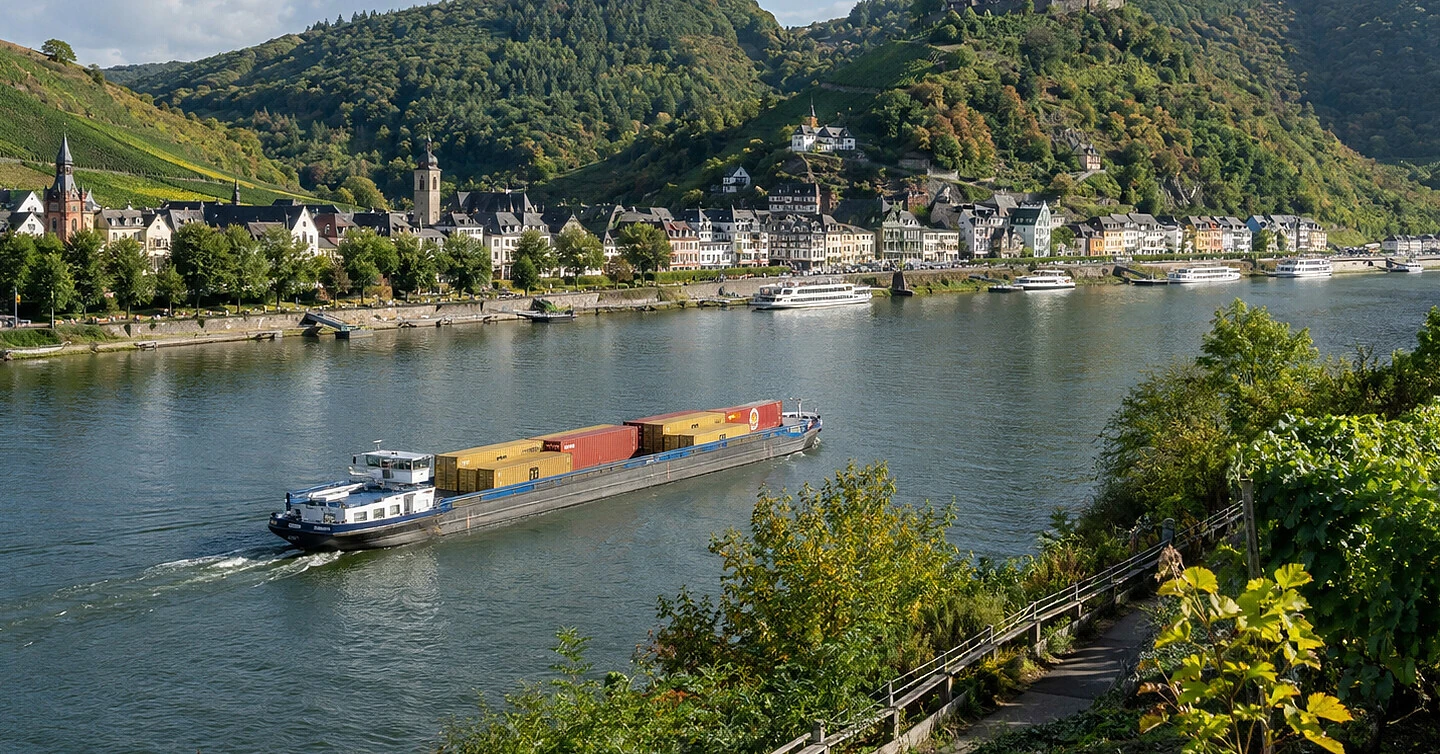
The water level in the Rhine has fallen to a historic low on the key navigation section near Kaub between Mainz and Koblenz. This week the indicator was about a third below the previous 2018 record, which significantly complicated the transportation of raw materials and industrial goods.
Due to shallow water, cargo vessels are forced to reduce loading, so more trips are required to transport previous volumes. Freight costs on some routes approached highest levels in almost 15 years, and ferry service across the Rhine near Kaub was temporarily suspended. The German inland shipping association warns that with further dropping of water, continuous navigation along the entire length of the Rhine may become impossible.
Problems are already affecting large industry. Daimler Truck arranged alternative delivery of new vehicles by road instead of river. Chemical concern BASF previously warned that prolonged disruptions might not exclude shortages of certain products or force majeure: a shortage of one raw material component can disrupt related plants. Back in late July, low Rhine levels forced Thyssenkrupp to cut pig iron output due to supply problems with raw materials.
To relieve logistics, North Rhine-Westphalia, Lower Saxony, Rhineland-Palatinate and Saarland temporarily allowed truck traffic on Sundays. Baden-Württemberg is joining them. Usually in Germany commercial trucks over 7.5 tons are banned from driving on Sundays and holidays from midnight to 10 pm.
The Rhine is critically important for transporting oil, coal, ore, minerals and chemical feedstock between German industrial areas and North Sea ports. ING economists estimate that current disruptions on the river may reduce Germany’s GDP growth by about 0.3 percentage points in 2026.
The problem had been intensifying over the summer. In late July, the gauge at Kaub already dropped to 25 cm, repeating the 2018 minimum, after which the level continued to decline. The gauge reading is not equal to the actual depth of the navigation channel, but the lower it is, the less cargo ordinary barges can take on board.
Based on materials from: Financial Times, Reuters
