
Sharks increasingly filmed off European coasts this summer — seas reshuffle predators' habitual routes
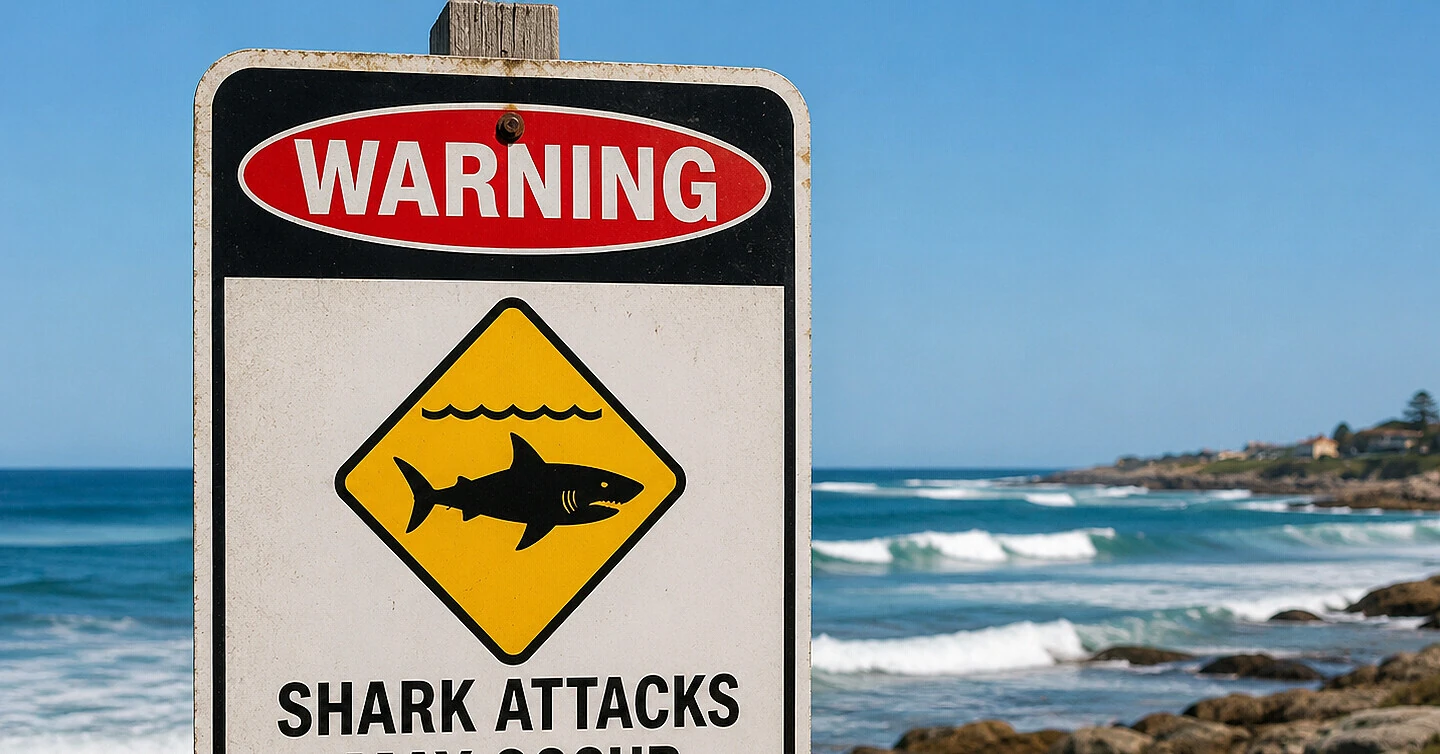
In summer 2026 sharks regularly appear in news from European resorts. In June divers in the Strait of Sicily obtained underwater footage of an adult great white shark, considered extremely rare. In August a large shark temporarily closed a beach on Jersey. Blue sharks, mako sharks and basking sharks — Cetorhinus maximus, the second-largest fish in the world — are filmed off Britain and in the Mediterranean.
Several processes are behind the surge in sightings. European seas are warming, the distribution of fish and squid is changing, and predators reroute to follow their prey. At the same time the recovery of some marine populations is restoring food sources for large sharks, while drones and smartphones capture encounters that until recently would have gone unnoticed.
Sea warming shifts the food base
According to the UK Met Office, the waters around Britain have been warming by about 0.3°C per decade over the past 40 years. Marine heatwaves are getting longer, and at times coastal temperatures exceed the long-term average by around 2°C.
The composition of marine life is changing too. The Atlantic bluefin tuna, until recently rare off Britain, now regularly returns to these waters. The southwest of the country has seen a sharp increase in octopus numbers.
For sharks, temperature alone is only part of the picture. The key factor is prey. Mackerel, sardines, squid and tuna are shifting feeding and migration areas, and large predators follow.
A similar mechanism is well studied off Cape Cod in the USA. After gray seal populations recovered off the coast, great white shark sightings — they are a major food source — rose sharply there.
Adult great white filmed in the Mediterranean
The most notable encounter this summer was a great white shark in the Strait of Sicily between Italy and Tunisia. Divers clearing a shipwreck of abandoned fishing nets captured an adult underwater. Researchers view this as the first such underwater footage of an adult great white shark in the Mediterranean.
This ancient predator is now very rare in the region. A genetic study in Journal of Biogeography dates the origin of the Mediterranean great white lineage to around 3.23 million years ago.
At the same time its population has severely declined. Analyzing 773 historical sightings, scientists estimated a total decline of about 61%, with declines up to 96% in some Mediterranean areas. The local great white population is critically endangered.
Mediterranean remains home to dozens of species
Dozens of shark and ray species live in the Mediterranean. Among sharks here are the blue shark, shortfin mako, thresher sharks, basking shark and great white shark.
Most large species spend much of their time in open waters. However, shifts in their food sources can periodically bring them closer to the coast, where the likelihood of encounters with boats, divers and holidaymakers rises sharply.
Technology also boosts sighting statistics. Drones survey large shallow areas from above, and virtually any encounter near a beach quickly ends up on social media and in national media.
Attacks remain rare
The rise in viral videos is not yet matched by a comparable increase in attacks on humans. The International Shark Attack File recorded 65 confirmed unprovoked shark bites worldwide in 2025. Nine were fatal.
Therefore this season is interesting primarily as an illustration of changes within the seas themselves. Warming and marine heatwaves are reshaping food webs, the recovery of some species returns prey to large predators, and modern cameras make these processes much more visible.
That is why a shark at a European resort today can be both a tourist sensation and a completely natural participant in a changing marine ecosystem.
Based on: The Telegraph, Fish and Fisheries, Journal of Biogeography
