
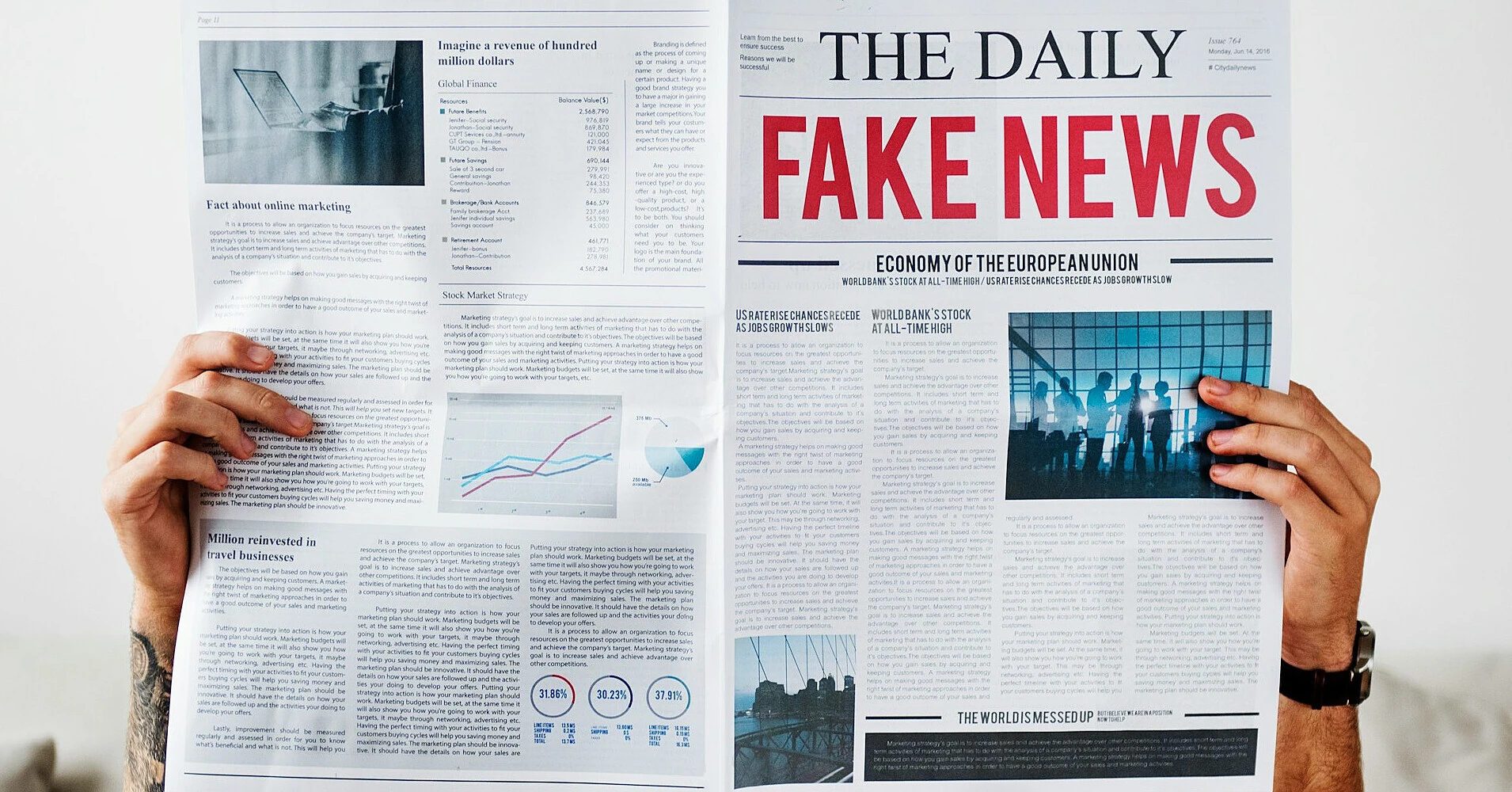
Artificial intelligence is being used ever more actively in political campaigns — and not always for harmless image processing or creating promotional videos. In various countries, fake videos and audio recordings have already appeared in which politicians allegedly withdrew from elections, admitted to manipulations, warned about non-existent terrorist attacks or advertised questionable investments.
Such materials are called deepfakes — these are images, videos or audio created or substantially altered with the help of artificial intelligence that imitate the face, voice or actions of a real person.
So far, researchers do not have convincing evidence that one particular deepfake decided the outcome of national elections. However, the experience of recent years shows another problem: fake content can confuse voters, reduce trust in the media and state institutions, and spread especially quickly right before a vote.
Main risks of synthetic content in politics:
- Crisis of trust: fakes not only deceive the audience but also allow politicians to call real compromising materials "AI fakes".
- Time factor: fake posts can be published just hours or days before a vote, when there is little time for prompt refutation.
- Disguise as media: fakes copy the design of reputable TV channels and media, including RTÉ, CNN and Deutsche Welle, increasing the plausibility of disinformation.
Six scenarios of AI interference in election campaigns
1. Ireland: candidate allegedly dropped out of the race
During the presidential elections in Ireland in 2025, about two days before the vote, a deepfake appeared in which independent candidate Catherine Connolly allegedly announced her withdrawal from the campaign.
The clip was designed as a news report from the public broadcaster RTÉ. The candidate's headquarters promptly refuted the information, and Connolly herself later won the election. However, this case showed how convincing a fake can look when it imitates not only the politician but also the design of a well-known media outlet.
2. Ecuador: fake reports of CNN and Deutsche Welle
During the 2025 presidential campaign in Ecuador, a series of AI-generated videos designed as reports by well-known international media circulated on social networks.
In one of them, candidate Daniel Noboa was accused of allegedly paying $1 million for the opportunity to attend Donald Trump's inauguration. In other materials, his opponent Luisa González was attributed with statements about a sharp increase in taxes.
The use of the visual style of well-known TV channels and news brands gave such materials an additional appearance of credibility.
3. Germany: fakes about terrorist attacks and threats during elections
Before the parliamentary elections in Germany in February 2025, videos about allegedly planned terrorist attacks, mined polling stations and other security threats were circulated.
Some videos used real footage of official agencies, to which false context and synthetic voice tracks were added. Among other things, materials imitating warnings from the British intelligence service MI6 appeared in the information manipulations.
Later, some accounts and materials were linked to pro-Russian disinformation networks that tried to influence the information environment around the German elections.
4. Slovakia: scandalous audio during the pre-election silence period
In 2023, about two days before the parliamentary elections in Slovakia, an audio recording appeared in which the voice of the leader of the "Progressive Slovakia" party Michal Šimečka was allegedly discussing vote-buying and ways to influence the election result.
The publication came during the pre-election silence period, which complicated a prompt response to the leak.
Šimečka's party ultimately took second place, losing to Robert Fico's forces. At the same time, it is impossible to prove that the deepfake specifically determined the election result: many political and social factors influenced the voting.
5. Romania: deepfakes of candidates for financial scams
During the 2025 presidential elections in Romania, fraudsters used images of candidates George Simion and Nicușor Dan to promote fictitious investment schemes.
In generated videos, the politicians allegedly recommended users to invest money in investment platforms and promised high returns.
The use of the faces of current candidates added extra persuasiveness to the fraudulent advertising, especially against the backdrop of politicians constantly appearing in the news and social networks during the campaign.
6. Pakistan: a leader's address from prison
In the 2024 parliamentary elections in Pakistan, supporters of former Prime Minister Imran Khan, who was imprisoned, used artificial intelligence to create videos with his image and voice.
After the vote, the party published a generated "victory speech" in which Khan addressed supporters and claimed success for the candidates he supported.
This example showed that synthetic content can be used not only by malicious actors for deception but also by political forces themselves as a communication tool.
Brazil tries to define permissible limits
The problem has become especially relevant ahead of the 2026 elections in Brazil.
The current rules of the country's Superior Electoral Court (TSE) require explicit labeling of synthetic content created or substantially altered with the help of artificial intelligence. The use of deepfakes to support or discredit candidates is separately prohibited.
The reason for a new legal dispute was an openly labeled video with a digital double of former President Jair Bolsonaro, shown in support of his son Flávio Bolsonaro.
The video itself indicated that the image and voice were created by artificial intelligence. Therefore, the court will have to determine whether the ban should cover even such clearly labeled AI imitations, or whether cases where the viewer is explicitly warned about the synthetic origin of the material and the content does not try to pass off a fake as a real statement by a politician are allowed.
This dispute is important not only for Brazil. As video and voice generation technologies become more accessible, election commissions and courts have to decide where permissible political satire or digital visualization ends and voter manipulation begins.
The experience of Ireland, Ecuador, Germany, Slovakia, Romania and Pakistan shows that deepfakes have already become part of the political information environment. At the same time, their main danger lies not necessarily in the ability to independently change the election result, but in that they make it harder for voters to understand which images, voices and messages can be trusted at all.
Based on materials from: Folha de S.Paulo / BBC News Brasil, Tribunal Superior Eleitoral
