Ratlko Mladic, convicted of genocide in Srebrenica, dies in The Hague
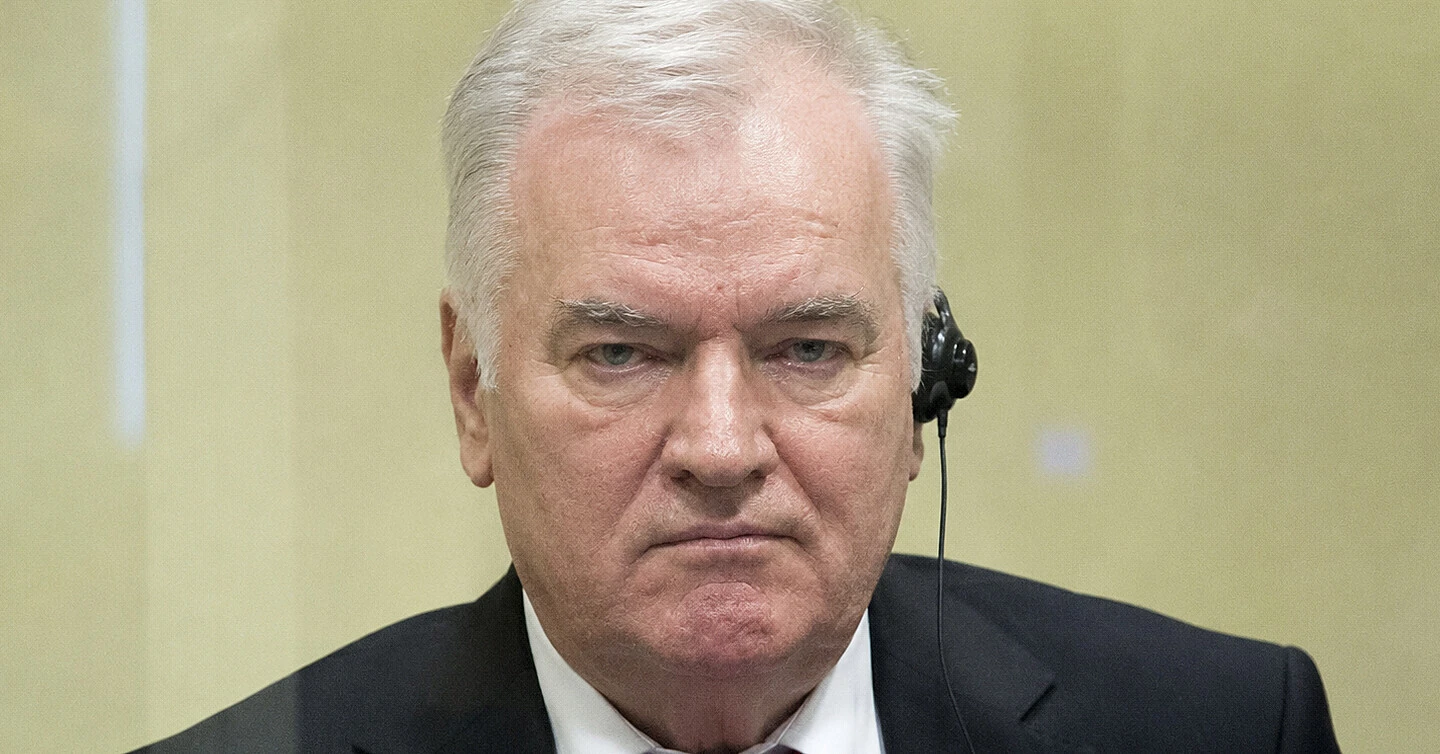
Former Bosnian Serb army commander Ratko Mladic, sentenced to life imprisonment for genocide in Srebrenica, crimes against humanity and war crimes during the war in Bosnia and Herzegovina, has died in The Hague. He was 84.
The death of Mladic on 27 August was first reported by Serbian television channel Informer. Soon the information was also published by N1 and a number of other media in the Balkan region. According to available data, Mladic died at the UN detention centre in The Hague, where he was under the jurisdiction of the International Residual Mechanism for Criminal Tribunals.
At the time of preparation of this material, there was no separate official statement from the International Residual Mechanism about Mladic's death on its website.
A few days before his death, the court refused to release Mladic
In recent months, the health condition of the former military officer had been deteriorating sharply. According to the court decision of 20 August, the medical service of the UN detention centre reported on 13 August that Mladic's general condition had rapidly deteriorated and he had entered the final phase of life. Doctors had shifted mainly to palliative care aimed at relieving suffering.
The document also indicated that Mladic's death could occur at any moment. A more precise life expectancy prognosis was concealed in the published version of the decision.
On 18 August, Mladic's defence filed another request for early release on humanitarian grounds. It proposed immediately transferring him to a hospital or palliative care institution in Serbia, where he would be under the control of Serbian authorities and could more often see family members.
However, the President of the International Residual Mechanism, Graciela Gatti Santana, rejected the request on 20 August. She pointed out that the nearness of death in itself does not automatically give the right to release, and in the prison hospital Mladic had been receiving comprehensive medical and palliative care.
When considering the matter, the judges were divided. Three supported the refusal to release, while two believed that the expected death in the near future was a sufficient humanitarian reason to allow Mladic to spend his final days with his family.
In April and May 2026, Mladic's family had also reported that he had suffered strokes. In June, his son Darko Mladic told Serbian media that his father had almost completely lost the ability to speak and had been bedridden for a long time.
Life sentence for genocide and crimes against humanity
Ratlko Mladic was born on 12 March 1942. He was a career officer of the Yugoslav People's Army, and after the start of the war in Bosnia and Herzegovina he became one of the leaders of the Bosnian Serb armed forces.
On 12 May 1992, Mladic was appointed commander of the Main Staff of the Army of Republika Srpska. As established by the international tribunal, he remained in that position at least until November 1996.
The International Criminal Tribunal for the former Yugoslavia first indicted Mladic back in 1995. After the war, he had been in hiding for many years and was arrested in Serbia only on 26 May 2011. Five days later he was transferred to the international tribunal in The Hague.
The trial of Mladic began in May 2012. On 22 November 2017, the International Criminal Tribunal for the former Yugoslavia found him guilty on ten of the eleven counts of the indictment and sentenced him to life imprisonment.
Among the crimes for which he was convicted are genocide in Srebrenica, persecution, extermination, murder, deportation and forcible transfer of the population, terror and unlawful attacks on civilians in Sarajevo, and taking UN personnel hostage.
At the same time, the court did not find proven the charge of genocide in relation to crimes against Bosnian Muslims and Croats in a number of other municipalities of Bosnia and Herzegovina in 1992.
On 8 June 2021, the Appeals Chamber of the International Residual Mechanism dismissed the main arguments of the defence and finally confirmed the conviction and life sentence.
Genocide in Srebrenica
One of the central episodes of the Mladic case were the events of July 1995 in Srebrenica, which the UN had earlier declared a safe area. On 11 July, Bosnian Serb forces under Mladic's command captured the town.
After the fall of Srebrenica, more than 8,000 Bosnian Muslims — men and boys — were systematically killed. Thousands of women, children and elderly people were forcibly removed from the enclave. Many bodies of the dead were initially buried in mass graves and then moved in an attempt to conceal evidence of the crimes.
The International Criminal Tribunal for the former Yugoslavia and the International Court of Justice have qualified the mass killings in Srebrenica as genocide. In 2024, the UN General Assembly established 11 July as the International Day of Reflection and Commemoration of the 1995 Genocide in Srebrenica.
Mladic was also found responsible for participating in a campaign of terror against the civilian population of Sarajevo through artillery shelling and sniper attacks, and for taking UN peacekeeping personnel hostage in 1995 with the aim of preventing NATO air strikes on Bosnian Serb positions.
After the final conviction, Mladic remained in the UN detention centre in The Hague. In the decision of August 2026, the International Residual Mechanism indicated that by that time he had spent more than 15 years in custody.
Based on materials from: Informer, N1, International Residual Mechanism for Criminal Tribunals, decision on release request, UN