
China has begun to squeeze Russia in the arms market of Central Asia
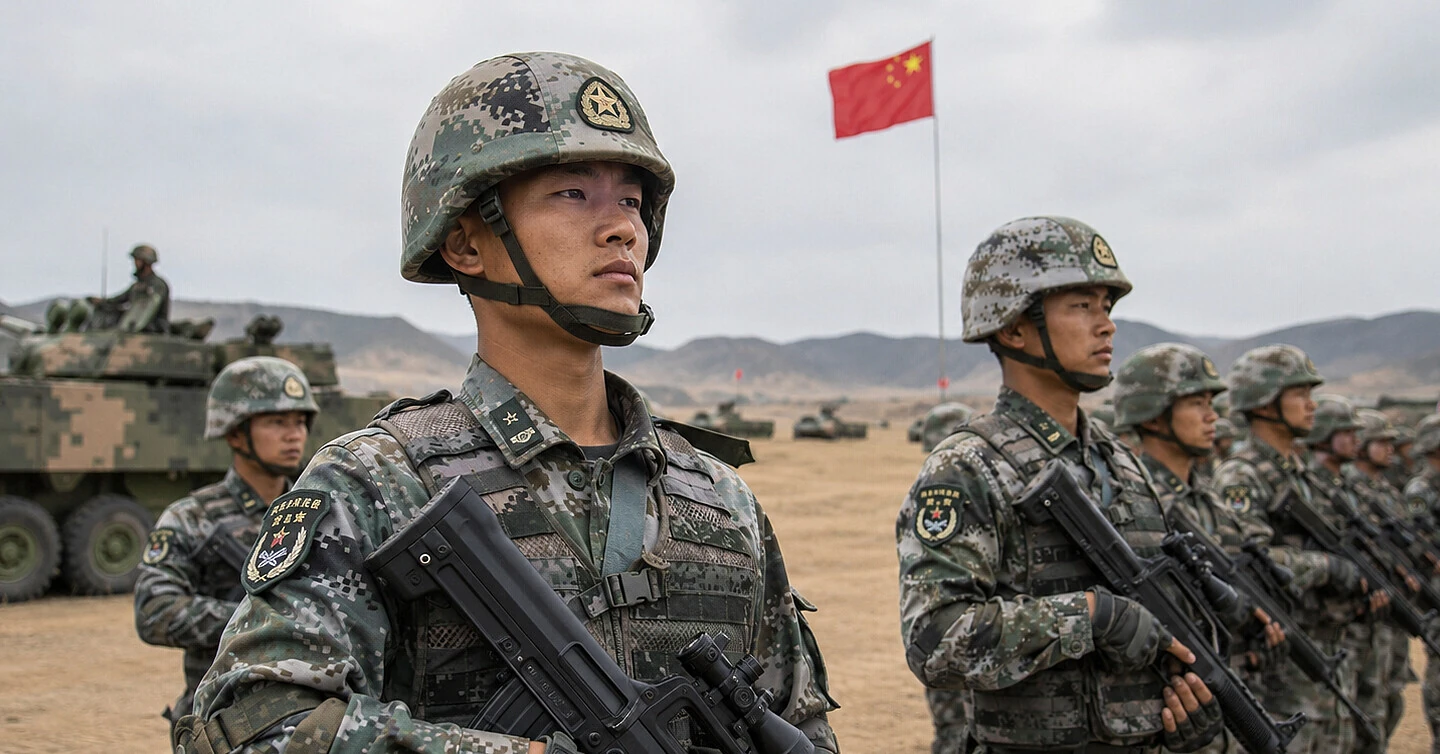
China is increasingly taking Russia's place in the arms market of Central Asian countries. Beijing supplies the region with air defense systems, drones, armored vehicles, and transport aircraft, and a possible purchase by Uzbekistan of Chinese J-10CE fighters could become one of the most noticeable signs of the weakening of Russia's long-standing monopoly.
This is reported by The Moscow Times, citing analysis by The Caspian Post and data from specialized publications. After the collapse of the USSR, Russia remained the natural arms supplier to Kazakhstan, Uzbekistan, Kyrgyzstan, Tajikistan, and Turkmenistan for decades, since their armies were built on Soviet equipment and corresponding infrastructure.
However, in recent years the countries of the region have begun to diversify their purchases more actively. This process accelerated after Russia's full-scale invasion of Ukraine, which limited the export capabilities of the Russian military-industrial complex and increased the risks of dependence on Moscow for other countries.
Uzbekistan may receive up to 24 Chinese fighters
The most notable new development has been reports of Uzbekistan's possible purchase of Chengdu J-10CE multirole fighters. According to Eurasianet and several specialized resources, Tashkent may have received the first four aircraft, and the alleged agreement provides for delivery of up to 24 aircraft in total.
At the same time, neither the authorities of Uzbekistan nor China have officially confirmed the delivery or the contract. In August, photographs of the J-10CE appeared in open sources, which analysts linked to a possible Uzbek order, but they alone do not prove that the aircraft has already been accepted into the country's Air Force.
If the information is confirmed, the J-10CE would be one of the most significant departures for Uzbekistan from traditional dependence on Russian and Soviet aviation technology. The country previously considered purchasing Russian Su-30SM.
China has also strengthened its position in Uzbekistan's air defense system. The country has purchased Chinese FD-2000 systems — the export version of the HQ-9 system.
Chinese air defense, aircraft, and drones appearing throughout the region
Turkmenistan has acquired Chinese long-range HQ-9 and medium-range HQ-12 air defense systems. Kazakhstan operates Chinese Y-8F-200 military transport aircraft.
Central Asian countries are also actively purchasing Chinese unmanned systems. Kazakhstan, Uzbekistan, and Turkmenistan have added Wing Loong and CH family strike drones to their arsenals.
Tajikistan has purchased armored vehicles, self-propelled mortar systems, and small arms from China. Beijing is also involved in financing and creating security infrastructure in the Tajik-Afghan border area.
The penetration of China into air defense and combat aviation segments is considered especially indicative. The purchase of such systems binds the customer to the supplier for years: the state will need missiles, spare parts, engines, software, repairs, modernization, and personnel training.
At the same time, Kazakhstan, Kyrgyzstan, and Tajikistan remain members of the Collective Security Treaty Organization together with Russia. The expanding use of Chinese equipment shows that even Moscow's formal military allies are seeking alternative suppliers.
Russian arms exports have collapsed by 64%
The weakening of Russian positions in Central Asia is happening against the backdrop of a sharp decline in Russia's overall arms exports.
According to the Stockholm International Peace Research Institute (SIPRI), the volume of Russian exports of major weapons in 2021–2025 fell by 64% compared to 2016–2020. Russia was the only country among the ten largest arms suppliers whose exports decreased.
Its share of the global market fell from 21% to 6.8%. Russia remained third among the largest arms exporters, but the gap with the United States and France widened sharply. China controlled 5.6% of global exports as of 2021–2025.
SIPRI does not attribute all of the decline solely to the war against Ukraine, but the Russian defense industry after 2022 has been forced primarily to supply its own army. At the same time, sanctions have made production of some systems and servicing of foreign clients' equipment more difficult.
As a result, additional space has opened up for China, Turkey, and other manufacturers in markets where Russian arms previously dominated. In Central Asia, this process is gradually turning the former near-total dependence on Moscow into a system with several major suppliers.
Based on materials from: The Moscow Times, The Caspian Post, Eurasianet, SIPRI
