

Putin Chose Escalation, Fearing the Consequences of Failure in the War - The Economist
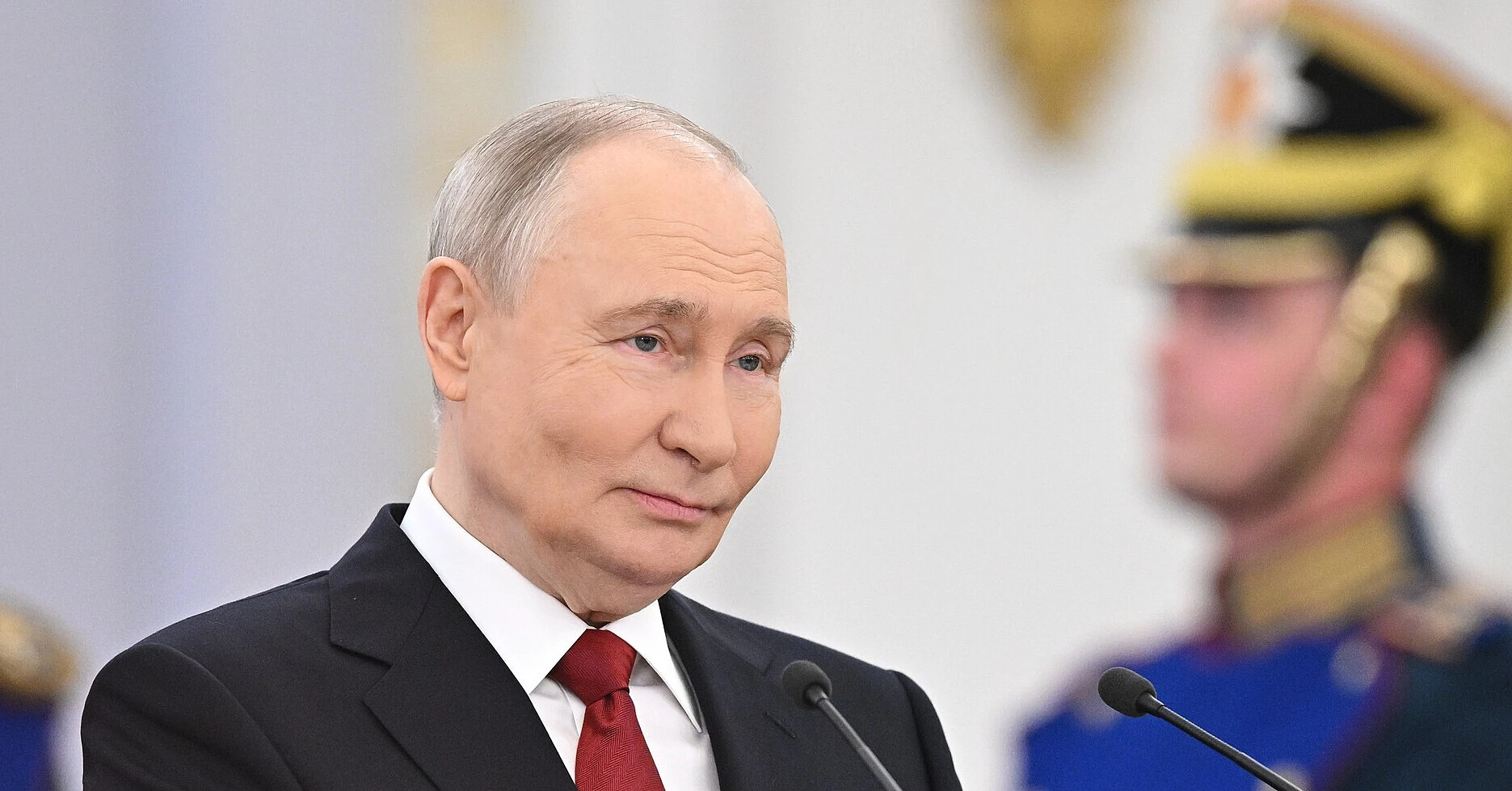
Russian ruler Vladimir Putin, after weeks of discussions in the Kremlin, appears to have decided to intensify the war against Ukraine. Among the possible steps are recruiting another 300-400 thousand people into combat operations, scaling up strikes on Ukrainian energy infrastructure, and expanding sabotage activities against European allies of Kyiv.
This is reported by The Economist, citing sources close to the Kremlin, representatives of the Russian elite, and Western intelligence structures.
According to the publication, over the summer, the Russian leadership discussed the further strategy of the war. Sources close to the Kremlin claim that Putin ultimately leaned towards escalation, because continuing the war in its current format gradually exhausts the economic resources and political capital of the regime, but does not give Moscow a decisive result.
Russia may recruit another 300-400 thousand people
One direction of escalation could be a significant increase in the number of Russian troops in Ukraine. Russian sources of The Economist claim that Putin is ready to send an additional 300-400 thousand people to the war.
At the same time, the Kremlin likely will not need to announce a new general wave of mobilization. Formally, the decree on "partial mobilization" of 2022 has not ceased to be in effect, and Moscow can recruit additional military personnel through regional recruitment systems.
According to the publication, the Russian authorities will try to shift the political costs of such recruitment as much as possible onto the regions. New mechanisms for attracting people to the military are allegedly already being tested in Penza Oblast.
Thus, Moscow can continue to increase army numbers without the politically risky announcement of a second large-scale mobilization. Information about plans to recruit exactly 300-400 thousand people comes from The Economist's sources and has not been officially confirmed by the Kremlin.
Europe fears new sabotage
Western intelligence agencies consider another direction of escalation to be the strengthening of Russia's hybrid war against countries that support Ukraine.
According to the publication's sources, Moscow may more actively attack logistics routes through which weapons flow from Europe to Ukraine. Western intelligence services consider as a separate risk sabotage against European enterprises producing weapons, ammunition, and drones for the Ukrainian army.
In recent weeks, several incidents in Europe have reinforced such fears. In Slovakia, law enforcement prevented an arson attack on a drone production facility, and German security agencies are investigating incidents with explosive drones near Leipzig/Halle Airport. According to German media, Berlin is preparing to officially place responsibility for the attack on Russia.
At the same time, the Western intelligence services cited by The Economist do not yet consider that Putin seeks a direct military confrontation with NATO.
CIA director traveled to Moscow with a warning
Western countries' concern intensified after CIA Director John Ratcliffe made an unusual unannounced visit to Moscow on August 25.
According to CBS News and other American media, one of Ratcliffe's tasks was to warn the Russian side against attacks on NATO countries, particularly the Baltic states. The Kremlin confirmed the CIA director's contacts with Russian intelligence services but stated that he did not meet with Putin.
The Economist notes that in the environment of the Russian ruler, this visit may have been perceived quite differently. One of Putin's longtime acquaintances told the publication that he could have interpreted the CIA chief's trip as a sign of US weakness—similar to then-CIA Director Bill Burns's visit in late 2021 before the full-scale invasion.
Ukraine faces new massive strikes on energy
On the territory of Ukraine, a new escalation, according to The Economist, would rather mean scaling up existing Russian methods of warfare than the appearance of a fundamentally new strategy.
On August 30, the Russian Ministry of Defense directly stated that the Russian army had begun preparations for massive strikes on Ukrainian energy infrastructure. Moscow is trying to present them as a response to Ukraine's strikes on Russian oil refineries and other facilities.
Such threats came after Ukraine sharply expanded its long-range attack campaign. Strikes on refineries, oil depots, logistics centers, and other facilities increasingly affect daily life in Russia itself.
War fatigue grows in Russia
The Economist links the Kremlin's decision to raise the stakes not only to the military situation but also to internal problems of the Russian regime. After almost five years of full-scale war, the lack of a decisive result is increasingly perceived by part of the Russian elite as a waste of time and resources.
Levada Center polls also record a deterioration in the assessment of the political situation. In July, 57% of surveyed Russians called it tense, and another 13% critical or explosive. Among the reasons for negative assessments, respondents named war, instability, and fear of the future.
At the same time, these indicators do not indicate an immediate threat to Putin's power: the Russian state retains significant financial resources and a powerful repressive apparatus. The Economist believes that for the Kremlin it is far more important to avoid demonstrating weakness and ending the war without achieving at least the minimum declared goals.
That is why, according to the publication, instead of winding down the war, the Kremlin may choose to raise the stakes further—increase troop numbers, intensify strikes on Ukraine, and expand hybrid pressure on Europe, even if this further increases Russia's own economic and human losses.
Sources: The Economist, CBS News