
Pashinyan publicly argued with Putin about Armenia's future in the EAEU
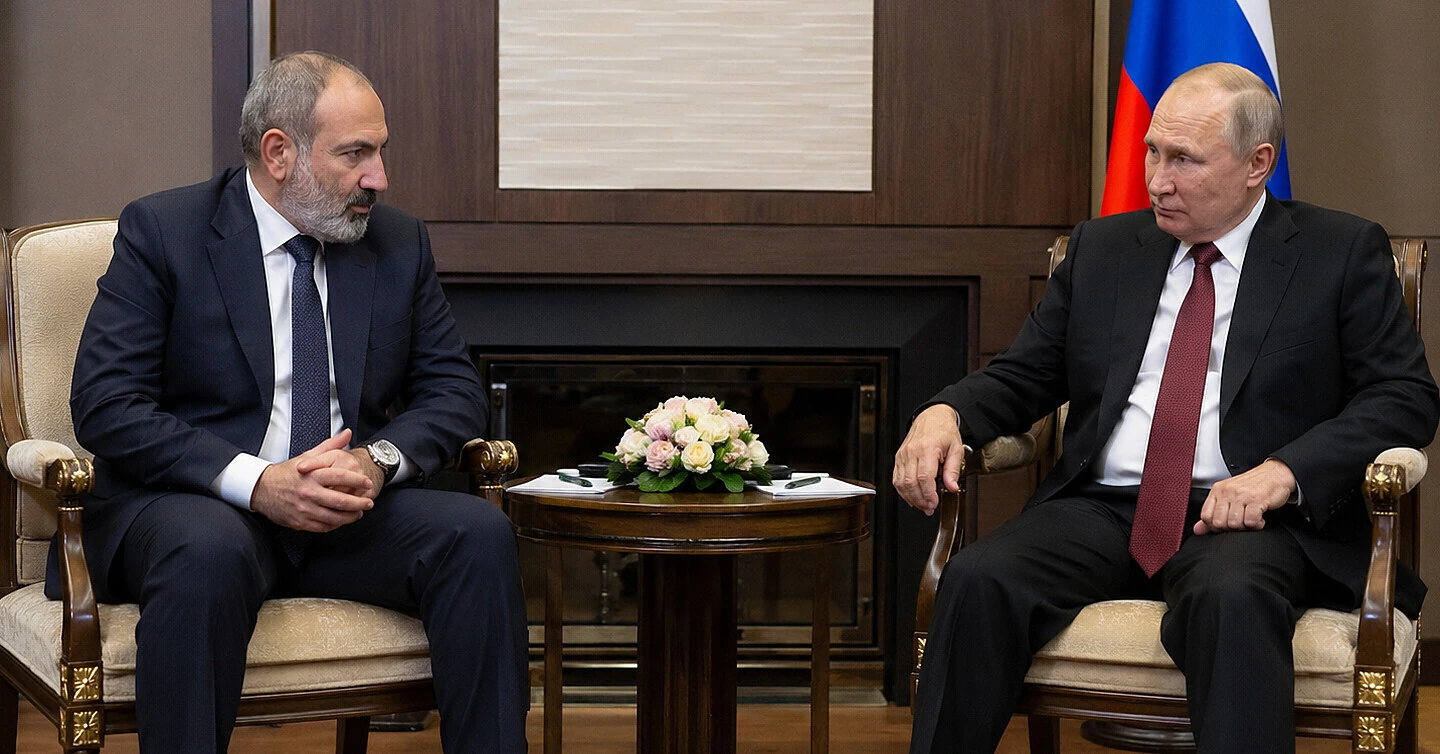
Armenian Prime Minister Nikol Pashinyan and Russian President Vladimir Putin publicly argued about whether Yerevan's course towards joining the European Union effectively means the country's exit from the Eurasian Economic Union. Pashinyan stated that Armenia has not violated its obligations to the EAEU and has not notified partners of an intention to leave the union. Putin disagreed with him.
The discussion took place on September 1 in Bishkek during a meeting between Putin and Pashinyan on the sidelines of the Shanghai Cooperation Organisation summit. The Russian leader himself raised the issue of Armenia's future foreign economic course and asked Yerevan to clarify its plans "as soon as possible".
Putin acknowledged Armenia's aspiration to EU membership as the country's sovereign right. At the same time, he stated that moving towards the European Union creates problems for Armenia's continued membership in the EAEU and could deprive it of the advantages of the common Eurasian market.
In particular, Putin argued that rules, technical standards and regulations in the European Union and the EAEU are incompatible in many areas. According to him, in case of further rapprochement between Yerevan and Brussels, questions will arise regarding the entry of European goods and services into the Russian market through Armenia.
He also cited economic arguments in favour of maintaining the current model. According to Russian data, Russia accounts for about 30% of Armenia's foreign trade, and trade turnover between the two countries in the first half of 2026 amounted to $2.5 billion. Putin claims that over more than ten years of Armenia's participation in Eurasian integration, its GDP has almost tripled, and exports to EAEU countries have grown tenfold.
Pashinyan stated that Armenia is not leaving the EAEU
Pashinyan responded by recalling the law "On the start of the process of accession of the Republic of Armenia to the European Union" adopted in 2025. According to him, the authorities analysed the treaty framework of relations with Russia and the EAEU both before and after the adoption of the document and found no violation of Armenia's obligations.
The Prime Minister noted that there is a separate procedure in the EAEU treaty for a state's withdrawal from the union. A country that decides to leave must notify partners six months in advance.
"At the moment, we have not informed our partners that we intend to withdraw from the Eurasian Economic Union", — Pashinyan said.
He also noted that the treaty does not provide for a mechanism to expel a state from the EAEU. In Pashinyan's opinion, it is the presence or absence of an official notice of withdrawal that should determine Armenia's status within the union.
Putin directly disagreed with Pashinyan
After that, Putin publicly objected to the Armenian Prime Minister. In his opinion, the adoption of a law on starting the process of accession to another economic union is already in itself effectively a statement of intent to leave the EAEU.
"You said that you have not declared withdrawal. The adoption of a law on starting the procedure for joining another economic organisation in essence means a statement of withdrawal from our organisation, because being simultaneously in both places is incompatible", — Putin stated.
Thus, Moscow and Yerevan publicly demonstrated fundamentally different understandings of Armenia's current status: the Russian side considers the official course towards the EU as the beginning of withdrawal from the EAEU, while the Armenian authorities believe that formally and legally they remain full participants in the Eurasian union.
Pashinyan acknowledged that a choice will have to be made anyway
At the same time, Pashinyan did not dispute Moscow's main assertion — full membership of Armenia simultaneously in the EU and the EAEU is impossible. Back in August he publicly said that Yerevan understands the incompatibility of membership in two economic unions at once.
During the conversation with Putin, the Armenian Prime Minister confirmed that a moment of clear choice will come in the future. However, in his opinion, such a choice is not required now, since a real alternative to Armenia's membership in the EAEU has not yet been created.
"We understand: the time will come when a very clear choice will need to be made. Our position is simply that at this moment that time has not yet matured", — Pashinyan said.
If a real possibility of EU accession arises, Armenia will make a decision — through a referendum or another procedure provided for by legislation, the Prime Minister added.
At the same time, Pashinyan explained why Yerevan adopted a law on starting European integration last year, although the question of direct EU accession is not yet on the table. According to him, one of the goals is to create an alternative for Armenia and provide the country with more options for further development.
He stressed that this process is not directed against Russia or the EAEU and in itself does not indicate Armenia's dissatisfaction with participation in the union.
Armenia has taken an official course towards rapprochement with the EU
The law on starting the process of Armenia's accession to the European Union was adopted by the country's parliament in March 2025 and came into force in April. The document originated as a civic initiative and officially declares the start of the European integration process.
At the same time, the law itself is not an application for EU membership and does not mean the automatic start of accession negotiations. Pashinyan previously explained that first Armenia must carry out reforms and move closer to EU standards, and only then may the question of a formal application and the country's final choice arise.
Thus, the public dispute in Bishkek highlighted one of the key contradictions in relations between Moscow and Yerevan: Armenia is trying to maintain the economic benefits of EAEU membership while simultaneously creating the possibility of future EU accession, while Moscow is demanding that it decide faster between the two integration directions.
Based on materials from: Government of Armenia, "Agency"
