
War in Ukraine has shown that NATO is not keeping up with changes on the battlefield — Reuters
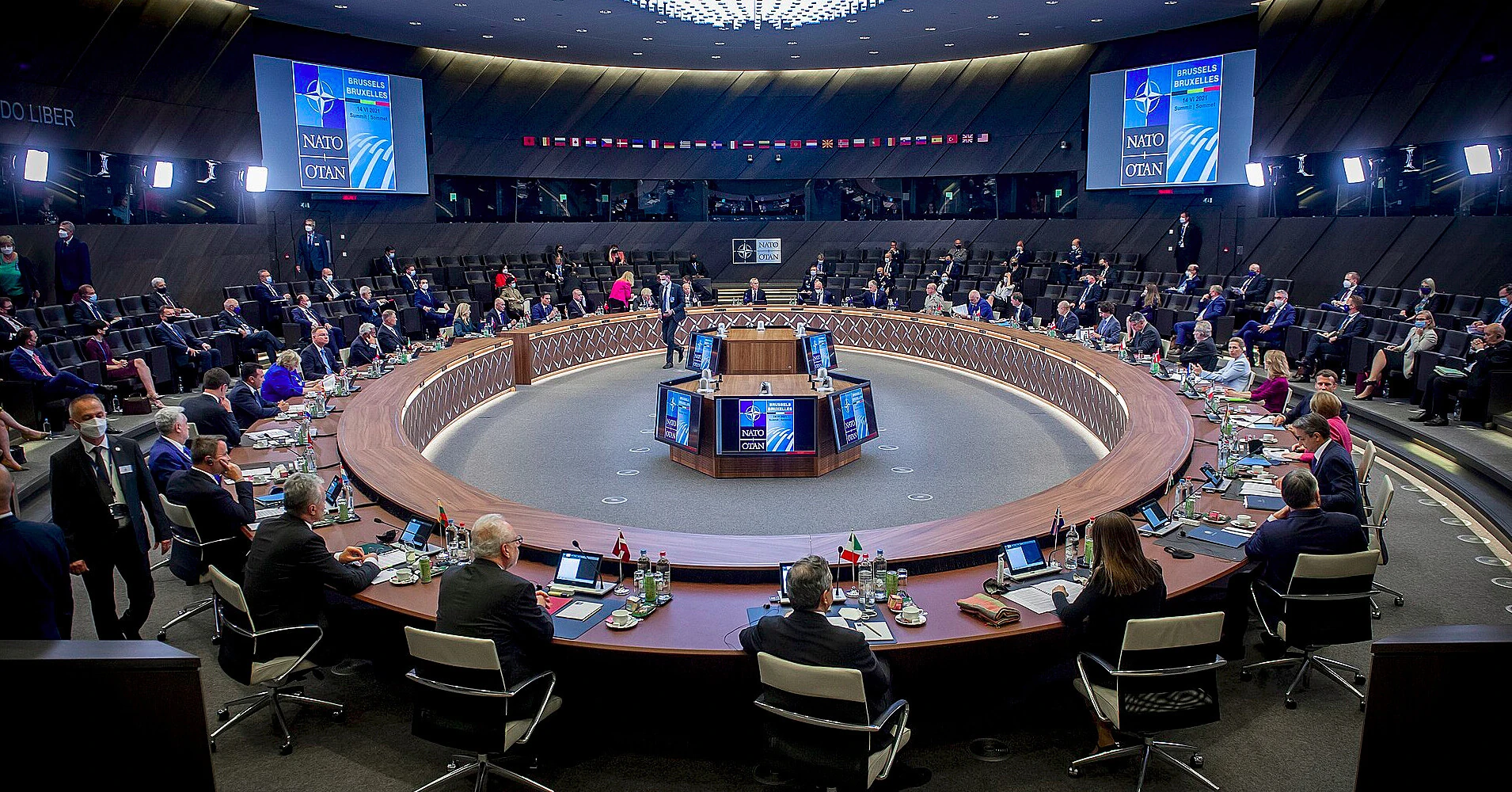
The experience of Russia's war against Ukraine has raised questions for NATO about how well the Alliance's weapons, tactics, and training system correspond to modern warfare. Ukrainian and Western military officials say that changes on the battlefield are occurring significantly faster than NATO can adapt its procurement and troop training.
This is stated in a Reuters article based on conversations with five Ukrainian and Western defense sector representatives. According to their assessments, some NATO weapons and tactical approaches risk becoming obsolete even before they are deployed at the necessary scale: Ukraine is forced to change decisions within weeks, while development and procurement of new systems in Alliance countries can take years or decades.
One of the main factors has been cheap drones. The mass use of FPV drones, reconnaissance UAVs, and long-range strike systems has sharply increased the vulnerability of armored vehicles, large convoys, and troop concentrations.
Commander of the National Guard of Ukraine Oleksandr Pivnenko told Reuters about the experience of joint training with foreign military personnel. According to him, partner units are well trained in classic assault actions, but Ukraine's experience shows that tactics must constantly account for the presence of drones over the battlefield.
Reuters cites as an example NATO exercises in June near Paldiski, Estonia. During these, American and European military personnel practiced providing aid to a large number of simulated wounded in field hospitals. However, the scenario assumed NATO control of the airspace over such facilities. Ukraine's experience shows that under the mass use of cheap long-range drones, guaranteeing such control is significantly more difficult.
At the same time, Ukraine is gradually becoming not only a recipient of Western military training but also a source of combat experience for NATO armies. Ukrainian military personnel are sharing knowledge with partners about drone use, electronic warfare, dispersion of units, and adaptation to constantly changing conditions.
Meanwhile, Reuters interlocutors point to the slow adaptation of the Alliance's military bureaucracy. One Ukrainian officer who underwent NATO training in psychological operations in Romania told the agency that some training materials still relied on examples from the Second World War era. NATO did not respond to Reuters' request regarding this criticism.
Air defense remains one of the main problems
Another vulnerability exposed by the war is Europe's air and missile defense. Large-scale Russian missile and drone attacks have shown European countries' dependence on expensive American systems, primarily Patriot.
European states are trying to reduce this dependence. In particular, Ukraine is expecting the new Franco-Italian SAMP/T-NG system, designed in part to combat ballistic missiles.
In addition, in July Ukraine and nine European states launched a coalition project to create a new anti-missile system called Freyja. The consortium includes about a dozen companies, with the Ukrainian Firm Fire Point as the leading private partner. Developers aim to make the system cheaper and faster to produce than the Patriot, while keeping key production capacities in Europe.
NATO itself recognizes the need to significantly increase capabilities for high-intensity warfare. The Alliance's new target figures provide for a fivefold increase in air and missile defense capabilities, the acquisition of thousands of additional armored vehicles and tanks, millions of artillery rounds, as well as a doubling of logistical, transport, and medical capabilities.
NATO representatives emphasize that the Alliance is already changing its approaches. Deputy Chairman of the NATO Military Committee Lieutenant General Winston Brooks said in September that deterrence must be based not on future plans, but on the actual weapons, ammunition stocks, trained units, and functioning production lines that troops have.
Thus, the Reuters article does not claim that NATO is generally incapable of waging war. Rather, it addresses the gap between the speed of technological and tactical changes demonstrated in Ukraine and the traditionally slower cycles of procurement, training, and decision-making in Alliance countries.
