
SpaceX put Starship into orbit for the first time and deployed Starlink satellites
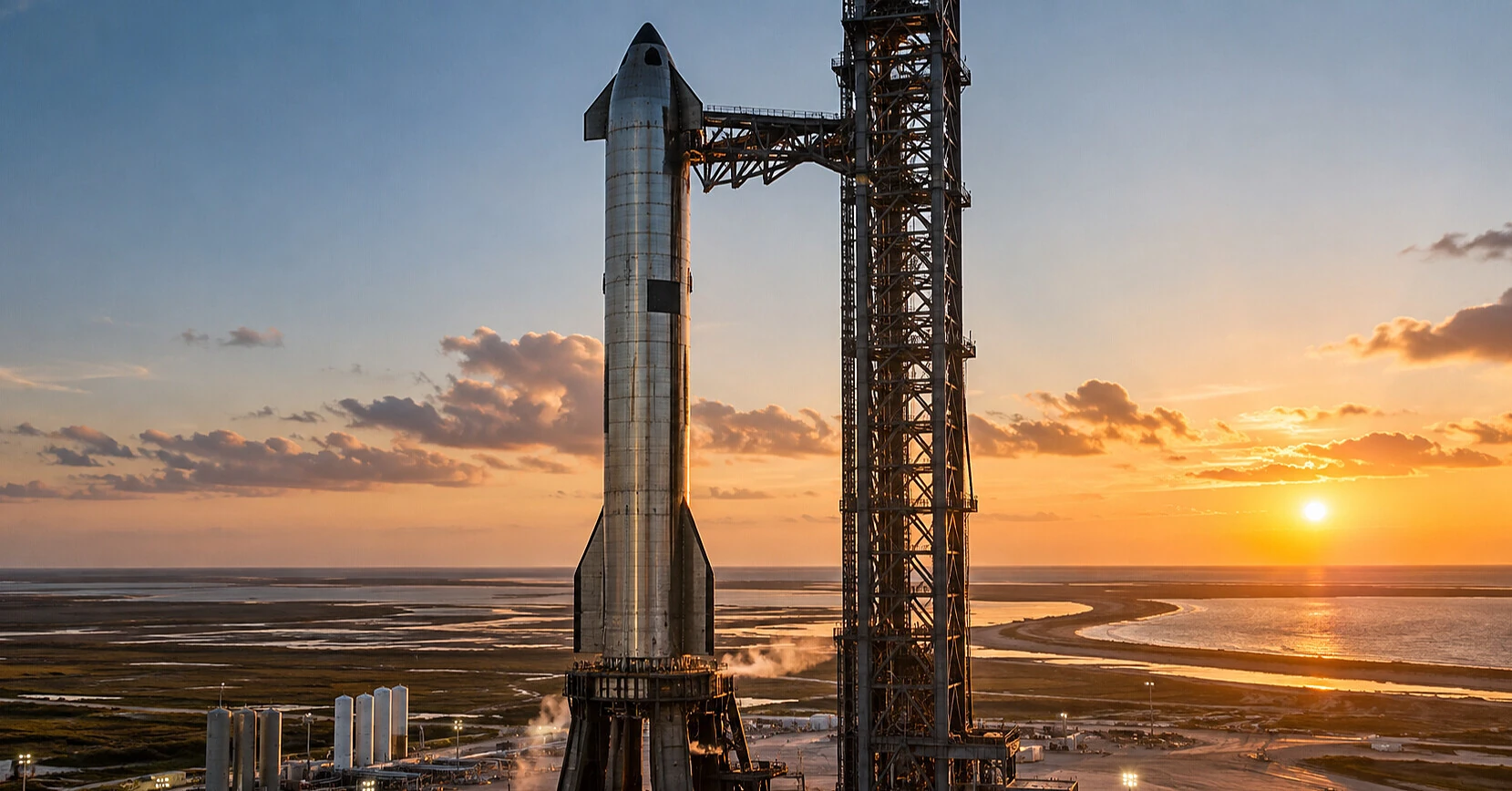
SpaceX has for the first time put the Starship spacecraft into a full Earth orbit and begun deploying 26 new-generation Starlink V3 satellites. The historic milestone was achieved during the 14th test flight of the Starship system on Monday, September 28.
The rocket lifted off from Starbase in southern Texas. After separation, the Super Heavy first stage performed a controlled return and splashdown in the Gulf of Mexico, while the Starship upper stage continued its flight into space.
During ascent, a problem occurred with one of Starship's engines: it shut down earlier than planned. Initially, SpaceX representatives said during the broadcast that because of this the ship would not be placed on an orbital trajectory. However, after additional assessment, engineers approved the necessary engine burn, and Starship successfully reached orbit.
After that, the ship began sequentially releasing 26 Starlink V3 satellites at an altitude of about 269 km. This is the first time Starship has delivered an operational commercial payload to stable low Earth orbit.
During the previous, 13th test flight in July, SpaceX already tested the satellite deployment mechanism, but the satellites used then were technology demonstration units not intended for long-term orbital operation. The new flight became the first full launch of Starlink satellites using Starship.
The V3 satellites should significantly increase the throughput capacity of the Starlink network. According to SpaceX data, one new-generation satellite is designed for approximately 1 Tbit/s of downlink capacity. In the future, one Starship will be able to put up to 60 such satellites per launch, which could potentially deliver about 20 times more capacity than a single Falcon 9 launch.
The orbital flight is planned to last approximately ten hours. Starship should complete about six orbits around Earth, then perform a deorbit burn, enter the atmosphere and make a controlled splashdown in the Pacific Ocean west of Chile. SpaceX does not plan to return the ship to the launch site during this test.
Reaching orbit is considered one of the most important milestones of the Starship program. All previous 13 full-scale test flights followed suborbital trajectories. SpaceX is developing the system as a fully reusable rocket for mass deployment of satellites, cargo and eventually people to low Earth orbit, the Moon and Mars.
Starship also plays a key role in NASA's Artemis lunar program: a modified version of the ship is to be used as a lander to deliver astronauts to the lunar surface.
For SpaceX, the current flight is also commercially important. As TechCrunch previously noted, this is the first Starship launch with a real operational payload. The company expects to use the rocket's enormous payload capacity in the future to accelerate the expansion of the Starlink constellation.
