
SpaceX prepares to compete with US mobile operators: company to acquire frequencies for Starlink Mobile
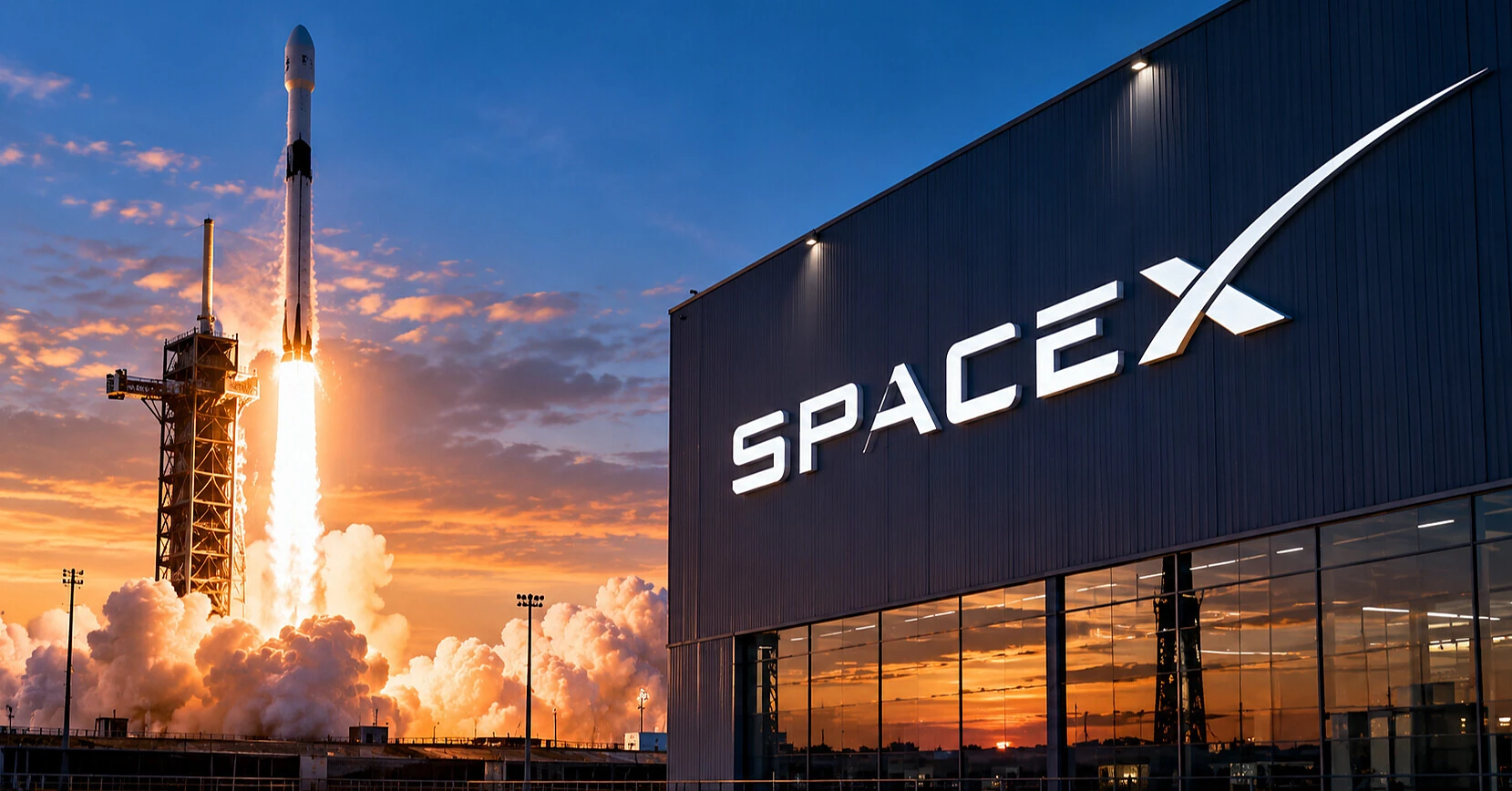
American space company SpaceX by Elon Musk has entered into an agreement to acquire radio frequencies to create its own mobile network in the US. The company plans to combine the Starlink satellite system with terrestrial infrastructure to provide connectivity on ordinary smartphones, including inside buildings. The news caused a drop in shares of major US mobile operators.
SpaceX announced the new deal on October 8. As reported by the Financial Times, investors viewed it as an important step towards Starlink's entry into the traditional mobile market.
SpaceX agreed to purchase a nationwide portfolio of licenses for frequencies in the 800 MHz band from Grain Management. The deal covers up to 14 MHz of paired radio frequency spectrum, which can be used to transmit signals between mobile devices and base stations.
The purchase price was not officially disclosed. The deal requires approval from the US Federal Communications Commission (FCC).
According to SpaceX, the low-band spectrum was one of the key technological elements missing for the company to build a full-fledged mobile network.
Starlink plans to provide coverage even inside buildings
Currently, satellite connectivity with ordinary smartphones has significant limitations. A direct line of sight to the sky is generally required for stable connection between a device and a satellite, so inside buildings or in dense urban areas signal quality can be degraded.
SpaceX wants to solve this problem by combining satellites with ground base stations.
In the future Starlink Mobile network, frequencies around 2 GHz will be used to provide high throughput, while the 800 MHz band is expected to improve coverage, including indoors.
Low-frequency radio waves better overcome obstacles such as building walls and can travel longer distances. According to SpaceX, most modern smartphones already support the relevant band.
Thus, the company aims to create a unified network that provides via terrestrial equipment in cities and via satellites where there is no traditional coverage.
SpaceX's goal is to transform Starlink from a satellite internet provider into a full-fledged competitor to American mobile operators.
Verizon, AT&T and T-Mobile shares fell
Following the announcement of the deal, shares of the largest US mobile operators significantly dropped in after-hours trading on October 8.
According to the Financial Times, Verizon shares lost about 7%, AT&T - 7.5%, and T-Mobile US - 6.7%.
This stock market reaction indicates investors' concern about the possibility of a new major competitor owning both satellite infrastructure and frequencies for terrestrial mobile service.
Bernstein analysts note that the spectrum purchase itself does not mean that SpaceX has definitively decided to build a full nationwide mobile network. But the deal makes such a scenario significantly more realistic.
To enter the mass market, SpaceX will need large investments in ground equipment, including base stations, antennas and other telecommunications infrastructure.
SpaceX received approval to launch new satellites
The frequency acquisition deal came nearly simultaneously with another important regulatory decision.
On October 6, the US Federal Communications Commission approved SpaceX's application to deploy a constellation of 15,000 next-generation satellites for direct connection to smartphones.
According to the company's plans, Starlink Mobile V2 satellites will provide more than 100 times higher cumulative throughput compared to the current generation of satellites designed for direct connection to mobile devices.
This is expected to expand the capabilities of the Direct to Cell technology, which already allows users of ordinary smartphones to send messages and use certain internet applications where there is no coverage from terrestrial operators.
Launch of the next-generation satellites is planned for 2027. Meanwhile, SpaceX has not announced a specific date for the launch of a full nationwide mobile service in the US and has not presented its pricing.
SpaceX had also earlier agreed to acquire frequencies from EchoStar, adding another step in preparation for expanding satellite mobile services.
Will the new technology affect Ukraine
Starlink already cooperates with mobile operators in several countries, including T-Mobile in the US, Rogers in Canada, KDDI in Japan, and Kyivstar in Ukraine.
Direct to Cell technology allows ordinary smartphones to connect to Starlink satellites without separate satellite terminals. It is intended primarily to provide connectivity in areas without terrestrial coverage and during emergencies.
However, the new SpaceX deal concerns radio frequencies in the US. Its conclusion alone does not imply automatic expansion of satellite mobile services in Ukraine.
Future capabilities of Starlink Direct to Cell for Ukrainian users will depend on the development of the satellite network, agreements with local operators, and regulatory conditions.
Thus, SpaceX is gradually moving from a model of supplementing traditional mobile coverage with satellite connectivity to creating its own hybrid telecommunications infrastructure. However, full entry into the mobile services market will depend on regulatory approvals, construction of a ground network, and its commercial launch.
Source: SpaceX, Grain Management, Financial Times
