

China declares breakthrough in memory production: Samsung and SK Hynix shares crash
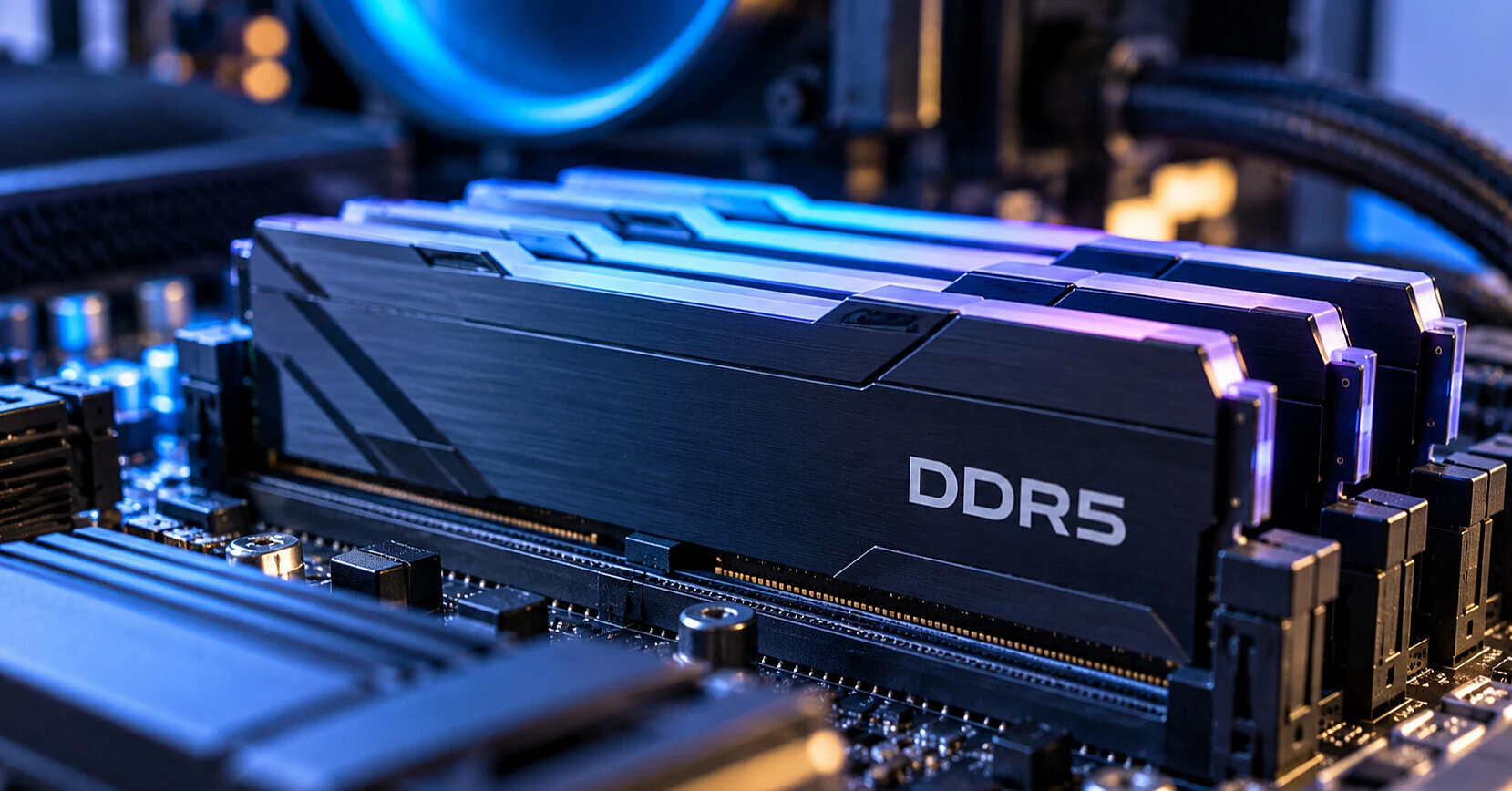
Shares of the world's largest memory chip makers fell after Chinese company ChangXin Memory Technologies (CXMT) announced progress in developing a technology that Samsung Electronics and SK Hynix have been working on for years. Investors fear that growing Chinese competition could threaten the high profits of the semiconductor industry, driven by the artificial intelligence boom.
This was reported by Bloomberg, citing a statement from CXMT management and stock market participants.
On October 13, Samsung Electronics shares on the Seoul stock exchange fell by 7.39%, and SK Hynix – by 10.09%. The main South Korean stock index KOSPI closed down 5.46% at 6,035.35 points.
The decline spread to the US market as well. The day before, Micron Technology, the world's third-largest DRAM maker, lost about 4%.
One of the reasons for the sell-off was information about a new CXMT technology that could potentially allow the Chinese manufacturer to reduce its technological gap with competitors.
China announces breakthrough in RAM production
CXMT President Cao Kangyu announced during an industry conference in Shanghai that significant progress had been made in developing a DRAM architecture called 4F.
Currently, most manufacturers use a 6F architecture, where a memory cell occupies an area equivalent to six squares of the minimum feature size.
Moving to 4F theoretically reduces cell area by about one-third and allows significantly more memory to be placed on a single chip. This can increase chip capacity and reduce data storage costs.
A key element of CXMT's development is a new transistor structure called Vertical Surrounding Gate. It features vertical arrangement of elements and is designed to reduce electrical current leaks that occur during further chip miniaturization.
According to the company executive, CXMT plans to introduce DDR5 RDIMM server memory modules based on the new architecture by the end of 2026.
This is a particularly important area, as server memory must ensure stable 24/7 operation and meet stringent reliability requirements.
Samsung and SK Hynix may face a new competitor
Leading South Korean manufacturers are also developing 4F architecture.
Samsung has already demonstrated experimental chips with a similar structure, but industrial adoption of the technology is not expected until 2028. SK Hynix is also working on its own architecture with vertical transistors.
If CXMT manages to implement its announced plans, the Chinese company could potentially beat competitors in bringing the new technology to market.
However, Bloomberg emphasizes that the technological breakthrough has not yet been independently verified. The company has not released sufficient data on the performance of the new chips, yield rates, or prospects for mass production.
Morningstar analyst Jing Jie Yu noted that successful application of 4F would significantly improve CXMT's competitive position. However, a long period may pass between demonstrating the technology and commercial production with acceptable defect rates.
The new development also does not mean that China has caught up with competitors in all segments. In particular, CXMT still lags in high-bandwidth memory (HBM) production, used in Nvidia's most powerful AI accelerators.
China is increasing its share of the global memory market
CXMT has already become a notable competitor to Samsung, SK Hynix and American Micron in the traditional DRAM segment.
According to analytics firm TrendForce, in the second quarter of 2026, the Chinese manufacturer ranked fourth in the global DRAM market by revenue. Its share rose to 9.5% from 7.6% the previous quarter.
By comparison, Samsung's share was 39.4%, SK Hynix – 24.9%, and Micron – 23.3%.
In July, CXMT conducted one of the largest initial public offerings in the history of China's stock market. The company raised billions of dollars to expand production and fund research.
The Chinese manufacturer's growth comes despite US export restrictions that complicate access to advanced semiconductor manufacturing equipment.
For Beijing, CXMT's technological progress is strategically important, as it reduces dependence on foreign chip makers needed for computers, servers and AI infrastructure.
Investors fear the end of super-profits
CXMT's announcement came at a time when memory makers are earning record profits thanks to high demand from data centers and companies developing artificial intelligence.
Chip shortages drove up DRAM and HBM prices sharply, allowing Samsung, SK Hynix and Micron to significantly increase revenue and profitability.
However, investors increasingly doubt that this situation will last long. Additional production capacity in China could gradually increase memory supply and intensify price competition.
At the same time, the current stock sell-off cannot be explained solely by CXMT's announcement. The market was also affected by broader concerns about the return on massive AI investments.
In particular, Broadcom CEO Hock Tan compared some current AI investments to gambling in a casino, heightening concerns about overvalued investor expectations.
Thus, the main risk for global memory makers is not only a potential technological breakthrough in China, but also the possible increase in competition after several years of shortages and record-high prices.
At the same time, CXMT's announcement does not yet indicate that RAM for computers or smartphones will quickly become cheaper. The real impact on prices will depend on readiness for mass production and supply volumes.
Sources: Bloomberg (The Edge), TrendForce, Yonhap