
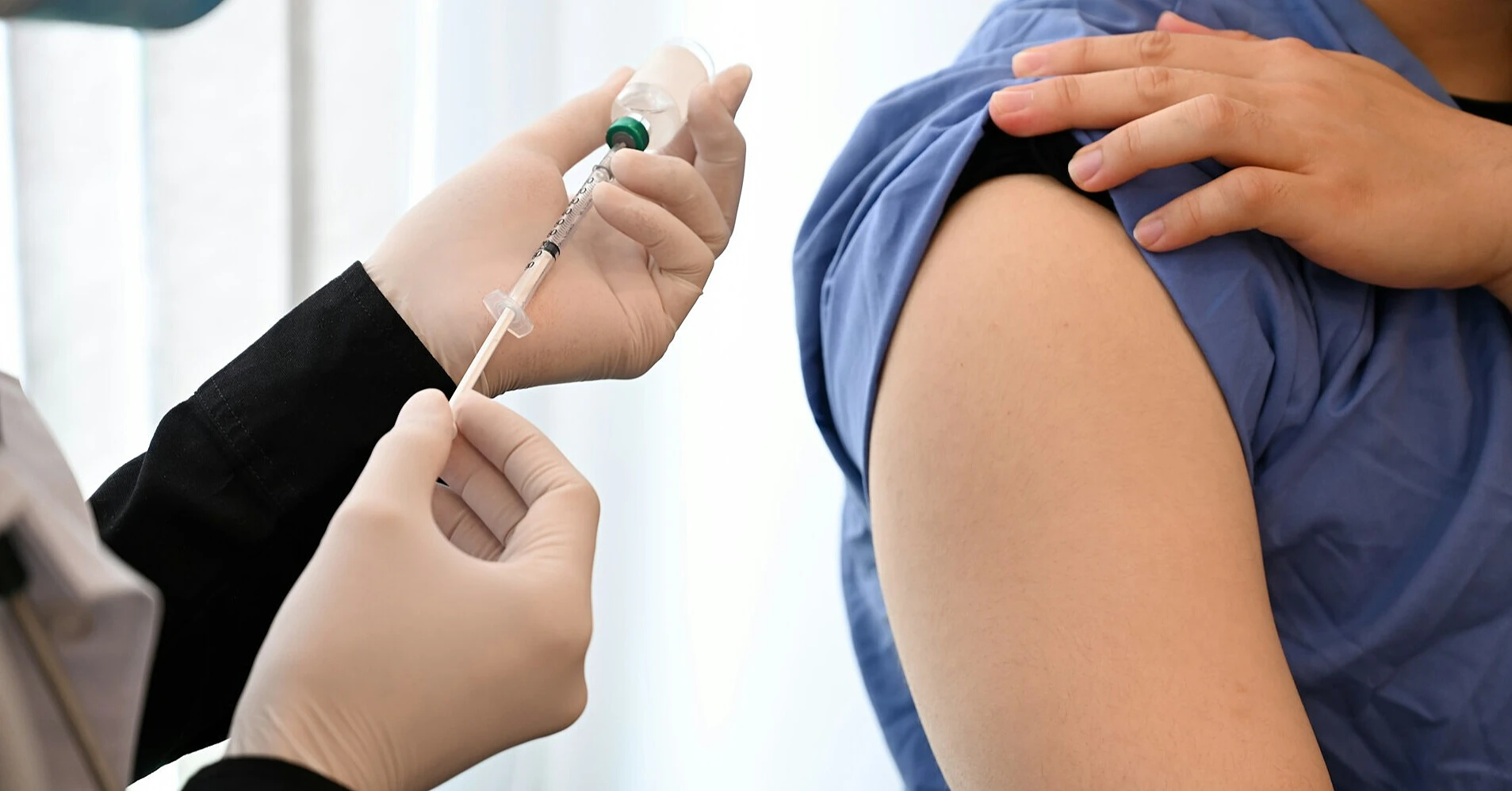
A new cancer vaccine, created individually for each patient, showed convincing results in a large clinical trial. In people with melanoma, it helped significantly reduce the risk of the disease returning after surgery. However, when detailed data became known, shares of the developer Moderna fell sharply. Why did good news for patients disappoint investors?
On October 22, Moderna and Merck revealed the results of the international Phase III INTerpath-001 study, in which 1,137 people participated. Adding a personalized mRNA vaccine to standard immunotherapy reduced the relative risk of recurrence or death by 42%.
This is an important result for oncology. But the story turned out to be more interesting than just another report of successful trials.
After tumor removal, danger remains
Melanoma is one of the most dangerous types of skin cancer. Even if surgeons completely removed the tumor, individual cancer cells can remain in the body. Sometimes the disease returns months or years later, including as metastases.
It is precisely for such patients that the vaccine intismeran is being developed. Unlike usual vaccinations, it is intended not to prevent the first disease, but to fight already developed cancer and reduce the risk of its return after surgery.
The study included patients with stage IIB–IV melanoma whose tumor was completely removed surgically. Participants were randomly divided into two groups.
Some received the experimental vaccine together with the drug Keytruda (pembrolizumab), which helps the immune system fight cancer cells. Others received the same pembrolizumab, but instead of the vaccine — placebo.
After two years, the results significantly differed:
- 82.2% of patients in the vaccine group remained alive and without recurrence of the disease;
- 70% of patients in the standard immunotherapy group had the same result.
Thus, the absolute difference was 12.2 percentage points. And when analyzing the risk of recurrence or death over the observation period, researchers found its relative reduction of 42%.
This does not mean that the vaccine reduced mortality by 42% or guarantees a cure. However, for patients who already had a dangerous tumor removed, the possibility of encountering a recurrence significantly less often is of great importance.
Another important result was obtained: the relative risk of developing distant metastases or death decreased by 38%. After two years, 88.5% of patients in the vaccine group remained free of such events versus 80.2% in the control group.
The vaccine is created based on the tumor's "genetic portrait"
The most unusual thing about this technology is that the drug cannot simply be manufactured in advance and issued to all patients with the same diagnosis.
First, specialists examine a sample of the removed tumor and compare its genetic features with the patient's normal cells. Then they select mutations characteristic of the cancer and, based on them, create an individual mRNA vaccine.
It can contain instructions for producing up to 34 special protein fragments — unique identifying marks of the tumor. The vaccine's task is to teach the immune system to notice these signs and attack cells that carry them.
To explain simply, doctors are trying to give the immune system a detailed "identikit" of a particular person's cancer cells.
As Associated Press reports citing Moderna leadership, the entire process — from tumor analysis to preparing a personalized drug — takes about six weeks, sometimes longer.
In the study, the vaccine was administered as a course of up to nine doses at a three-week interval. Patients also received pembrolizumab.
An interesting detail emerged in an additional analysis of results: in the first six months, risk indicators for recurrence or death were comparable between the two groups. After completing the vaccination course, the advantage of combined treatment became more pronounced.
In this pre-planned additional analysis, the relative risk reduction after the sixth month reached 58%. However, the primary result of the entire study remains the same — 42%.
Why did Moderna shares crash after such a result?
It would seem that a successful Phase III trial should have been excellent news for investors. But on October 22, Moderna shares on the US stock exchange lost more than 17% by the end of trading, and during the day the drop exceeded 25%.
According to Reuters, details of the study initially appeared online before the planned announcement. After the leak, the companies decided to officially disclose the results without waiting for the medical congress.
The main reason for the market's negative reaction was inflated expectations.
Back in August, Moderna and Merck reported Phase III success but without detailed figures. On the wave of optimism, Moderna shares rapidly rose. Investors expected that the new data would be exceptionally strong and would confirm the technology's prospects not only in melanoma but also in other cancer types.
Analysts paid special attention to the vaccine's ability to prevent distant metastases. In an earlier Phase II study, a 59% relative risk reduction in metastases or death was reported over a five-year follow-up. Now in Phase III, this indicator was 38%.
The results of different studies cannot be compared directly: patient composition and observation conditions differed. But for the stock market, the difference between expectations and new numbers was substantial.
Additional questions are raised by the future cost of individual production and how successfully the technology can work for other tumors.
A paradox emerged: a result that doctors consider an important step in melanoma treatment turned out to be insufficient for investors who had already priced in an even larger success.
Does this mean the vaccine will soon appear in hospitals?
It is still too early to talk about mass use. Intismeran remains an experimental therapy that has not yet received regulatory approval.
In addition, researchers must answer the most important question for patients: whether the new treatment can increase overall survival, not just delay recurrence of the disease. Data on overall survival are not yet mature enough for a final conclusion, although developers report a favorable trend.
There is also a safety question. Adverse reactions related to treatment were reported in 95.8% of patients receiving the vaccine with pembrolizumab and in 90% in the control group. Most often, fever, injection site pain, and fatigue were noted.
Severe reactions were reported in 14.2% of patients in the combination treatment group versus 13.4% in the control group. No new safety signals were identified, according to the companies.
The study results have been accepted for publication in The New England Journal of Medicine. They are also planned to be presented on October 24 at the congress of the European Society for Medical Oncology in Madrid.
Moderna's head said in an interview with Reuters that the company expects a possible US market entry for the vaccine in 2027. However, this is the developer's forecast, not an approved date: regulatory authorization will be needed for use to begin.
For now, the study shows an important thing: cancer treatment can be personalized not only by the name of the disease but also by the individual characteristics of the tumor itself. And now this approach has confirmation of efficacy in a large Phase III trial.
Based on materials from: Merck and Moderna, Reuters, Associated Press.
