
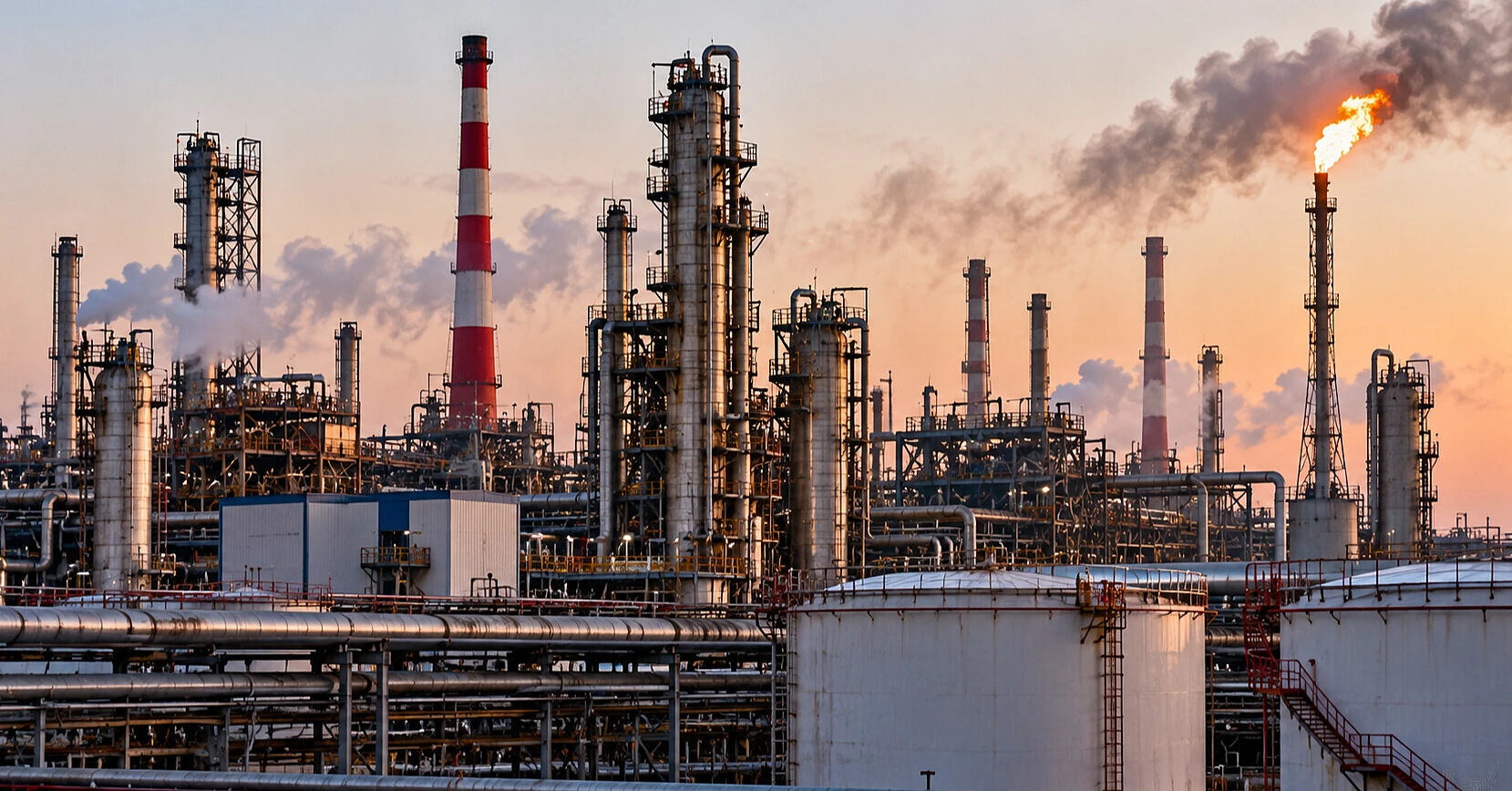
Russian oil refineries have begun to ramp up diesel fuel production after Moscow reached an agreement with the administration of US President Donald Trump to resume oil product supplies to the global market. Russian authorities have granted oil companies special export quotas, allowing them to increase fuel output following a previous production cut.
This was reported by Reuters on October 26, citing two sources in the oil refining industry.
In the first half of October, diesel production in Russia dropped to about 160 thousand tons per day compared to 175 thousand tons in September. However, after the export quotas were granted in the middle of the month, fuel output began to recover and approach 180 thousand tons per day.
Thus, Russian refineries expect to increase daily output by about 12.5% compared to the first half of October. At the same time, the output may exceed the September level, despite damage to refining capacity from Ukrainian attacks.
According to traders, from October 1, the Russian government began providing exemptions from the current ban on diesel fuel exports. The corresponding quotas allow companies to make deliveries under the agreement between Moscow and Washington.
Russia imposed a ban on diesel exports in August 2026 amid a shortage of petroleum products in the country. Due to the restrictions, refining companies had to reduce production in line with domestic demand. Exemptions were mainly in effect for deliveries to Central Asian states under intergovernmental agreements.
Now Russian enterprises can obtain additional fuel volumes for export due to a seasonal decline in domestic consumption.
According to estimates by industry sources from Reuters, in October, domestic demand for diesel in Russia usually drops to about 140 thousand tons per day. This is due to the end of grain harvesting and the summer driving season.
With production at around 180 thousand tons daily, the potential exportable resource could be at least 40 thousand tons per day, or more than 1 million tons per month. At the same time, between 200 and 300 thousand tons monthly may be needed for deliveries to neighboring states.
The agency's sources suggest that the Russian government will maintain the overall ban on diesel exports, but will continue to regulate foreign shipments through special quotas. Their volume will depend on the situation in the domestic market and the capabilities of refining enterprises.
Recall that on October 9, Donald Trump announced an agreement with Vladimir Putin on supplies of Russian diesel fuel to the US and other markets. Washington temporarily eased sanctions restrictions to implement the agreement.
According to the plans announced by Trump, Russia must supply over 300 thousand tons of diesel at the initial stage, another 500 thousand tons in November, and an additional 1 million tons after that. The possibility of supplying the next 3 million tons depends on the condition of Russian refineries.
According to LSEG ship tracking data, on October 23 a tanker flying the Maltese flag sent a signal that it was heading to New York with a cargo of 40 thousand tons of Russian diesel fuel. On the same day, Kremlin spokesman Dmitry Peskov said that supplies of Russian diesel to the US are planned to be carried out regularly.
Earlier, Kurs.com.ua reported on the resumption of Russian diesel supplies to Turkey and Brazil after the agreement with Washington.
Meanwhile, the International Energy Agency had previously warned that Russia's ability to significantly increase fuel exports remains limited. The main problem is related to damage to refining capacity due to Ukrainian strikes, so an administrative easing of export restrictions alone does not guarantee a significant increase in supplies.
