
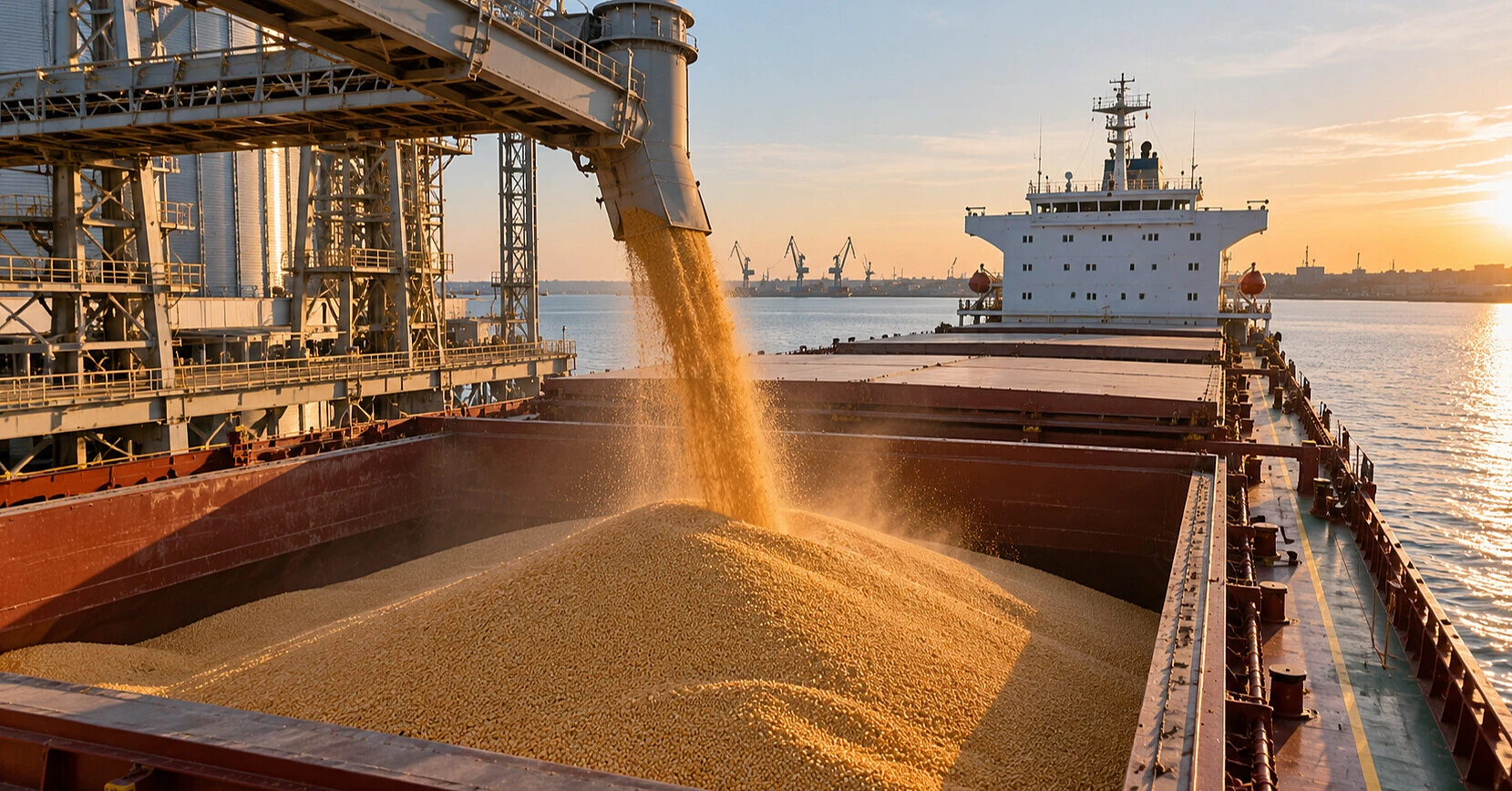
Russian authorities for the first time in three and a half months allowed grain vessels to leave the Azov Sea ports through the Kerch Strait. This opens the possibility of a partial resumption of grain exports, which had been severely restricted due to attacks on ships and port infrastructure. In the global wheat market, the news has already led to lower prices.
Bloomberg reported this on October 28, citing three sources familiar with the situation.
Temporary exit permits were granted to grain vessels located in the Russian ports of Temryuk and Kavkaz. According to the agency, at least one vessel has already passed through the Kerch Strait into the Black Sea.
The possibility of obtaining permission appeared on Monday, October 26. Ship owners can apply provided that the ships are fully prepared for the voyage and fully crewed.
As Reuters reports, citing seven industry sources, permits for passage through the Kerch Strait will be issued until November 15. Two of the agency's interlocutors claim that Russian warships plan to escort the grain carriers in the Black Sea.
However, a full resumption of navigation is not guaranteed yet. Even after leaving the Azov Sea, commercial vessels remain under threat of drone attacks, and there are no permanent security guarantees for grain exports.
Russia closed this route on July 10, 2026 amid Ukrainian strikes on ships involved in Russian logistics. The restrictions affected not only traffic through the Kerch Strait, but also transportation along the Azov-Don Sea Canal.
Before the suspension of navigation, about a third of Russian sea-borne wheat exports passed through the Azov Sea. The route stoppage led to accumulation of grain in the southern regions of the Russian Federation and forced exporters to redirect some supplies through the Baltic Sea and other routes.
As Kurs.com.ua previously reported, disruptions in the operations of the Black Sea and Azov Sea ports led to significant losses for Russian transport companies. Industry representatives appealed to the government with requests for financial assistance, cost compensation, and preferential lending.
The global grain market reacted with lower prices. According to Bloomberg, on October 28 Chicago wheat futures fell 2.8%, reaching the lowest level since July 1.
However, market participants do not expect the limited resumption of navigation to immediately eliminate supply problems. Bertrand Osterle, vice president of brokerage firm StoneX, noted that the initial reaction in quotes was significant, but the opening of ports by itself does not change the assessment of military risks.
Additional uncertainty is associated with negotiations on maritime navigation safety in the Black Sea. Turkey, which purchases Russian grain, advocates the restoration of sea shipments, but no agreement on a complete halt to attacks on commercial shipping has been reached.
Information about ship names, final recipients of cargoes, and the origin of specific grain batches is not disclosed. Therefore, based on published data, it cannot be established whether the cargoes permitted for shipment include grain exported from the temporarily occupied territories of Ukraine.
