
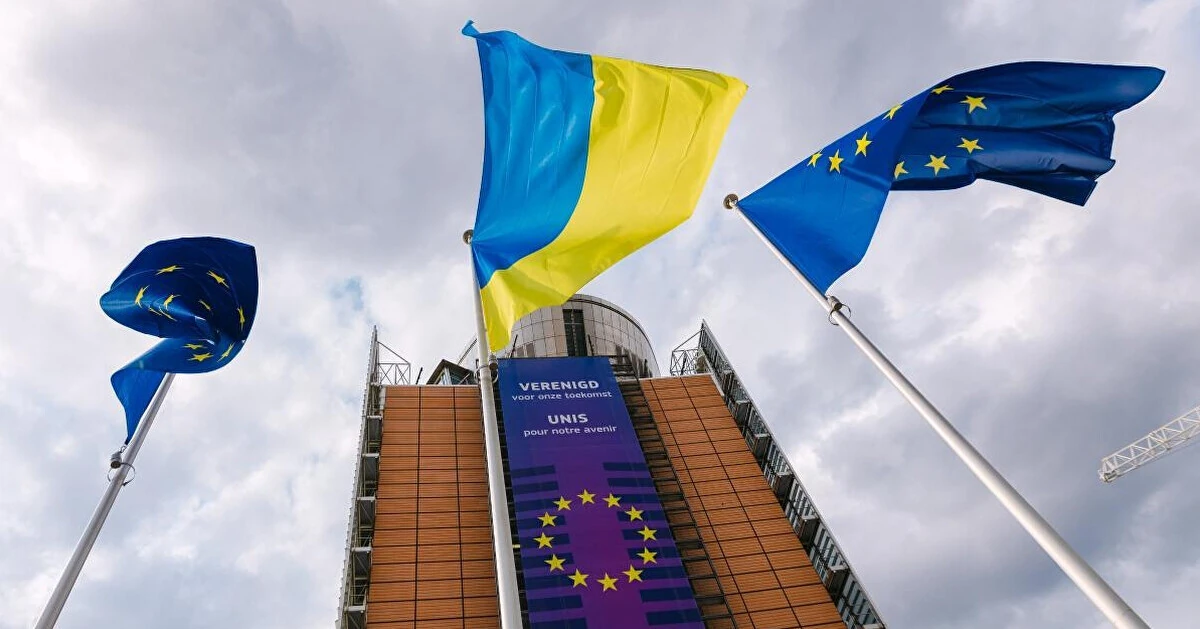
Ukraine may significantly lag behind Moldova in negotiations on accession to the European Union due to insufficient pace of reforms, primarily in the rule of law and fight against corruption. According to the new benchmarks of the European Commission, Moldova may complete the negotiation process in early 2028, while Ukraine aims to achieve this result by the end of the same year.
Financial Times reported this on November 5, citing the annual package of European Commission documents on EU enlargement, officially presented on November 4.
According to Brussels' assessments, during 2027 Moldova may provisionally complete negotiations on 25 thematic chapters, while Ukraine – only seven. This creates preconditions for different paces of European integration of the two states, which applied for EU membership in 2022 and have until now gone through the main stages of negotiations in parallel.
The European Commission believes Moldova has the opportunity to complete negotiations in early 2028, provided the current pace of reforms is maintained. For Ukraine, the benchmark remains the end of 2028, but achieving this goal will require significant acceleration of changes.
At the same time, the specified deadlines relate to the completion of negotiations, not actual accession to the EU. The final decision on admitting a new state requires agreement on an accession treaty and its ratification under EU procedures.
One of the main obstacles to faster progress for Ukraine, according to the European Commission, is insufficient progress in the rule of law and fight against corruption. Brussels expects Kyiv to further reform the judiciary, ensure independence of anti-corruption bodies, improve the functioning of state institutions, and fulfill obligations in fundamental rights.
At the same time, the European Commission's official communication positively assessed the preservation of independence and effectiveness of Ukraine's specialized anti-corruption institutions during the full-scale war.
European officials also noted the continuation of reforms and the recent adoption by the Verkhovna Rada of legislative changes necessary to meet conditions of international financial support.
To accelerate reforms, the European Commission has created a special working group to help Ukraine coordinate the implementation of EU requirements in the rule of law. Brussels expects significant progress on relevant intermediate benchmarks already in the first half of 2027.
According to the new roadmap, in the first half of 2027 Ukraine may provisionally complete negotiations on the "Education and Culture" chapter. In the second half, the possibility of completing six more chapters is envisaged, including intellectual property, social policy and employment, industrial policy, research, external relations, and foreign, security, and defense policy.
Meanwhile, Moldova may provisionally complete nine negotiation chapters in the first half of 2027 and 16 more in the second. Among them are financial services, taxation, energy, transport, competition, consumer protection, and environmental policy.
EU Ambassador to Ukraine Katarína Mathernová stressed that a possible separation of negotiation processes for Kyiv and Chișinău should not diminish Ukraine's achievements. According to her, continuing large-scale reforms in the fifth year of full-scale war deserves special attention given the difficult security conditions.
President of Ukraine Volodymyr Zelenskyy has previously opposed separating the negotiation processes of the two countries, calling such a step morally wrong. Ukraine emphasizes its role in deterring Russian aggression and ensuring the security of the European region, including Moldova.
Despite differences in projected negotiation paces, Ukraine's EU integration process continues. On October 13, the EU Council confirmed the opening of two new negotiation clusters – "Internal Market" and "Competitiveness and Inclusive Growth". Together they cover 17 thematic chapters.
The European Commission also considers that Ukraine has already met the necessary conditions for opening the remaining two negotiation clusters related to green transformation, transport, agriculture, and regional development. Brussels calls on member states to ensure their opening by the end of 2026.
Separately, the European Union is working on gradual integration of candidate countries into the single market even before full membership. The new enlargement package envisages development of cooperation in energy, transport, digital sphere, and defense, provided relevant European requirements are fulfilled.
In parallel with membership negotiations, the question of further financing for Ukraine remains open. According to Financial Times, in 2027 the country may face the need for an additional EUR 70 billion. The European Commission is working on mechanisms to secure about two-thirds of this amount – around EUR 45 billion.
One possible approach remains European joint financing. At the same time, among EU member states there remain disagreements regarding the distribution of future costs of support for Ukraine and decision-making mechanisms.
The deadlines presented by the European Commission remain indicative and depend on actual implementation of reforms and further steps agreed by EU member states. Therefore, the difference between Ukrainian and Moldovan roadmaps does not yet mean official separation of negotiation processes or setting final accession dates.
Sources: Financial Times, Politico, European Commission report on Ukraine 2026
