
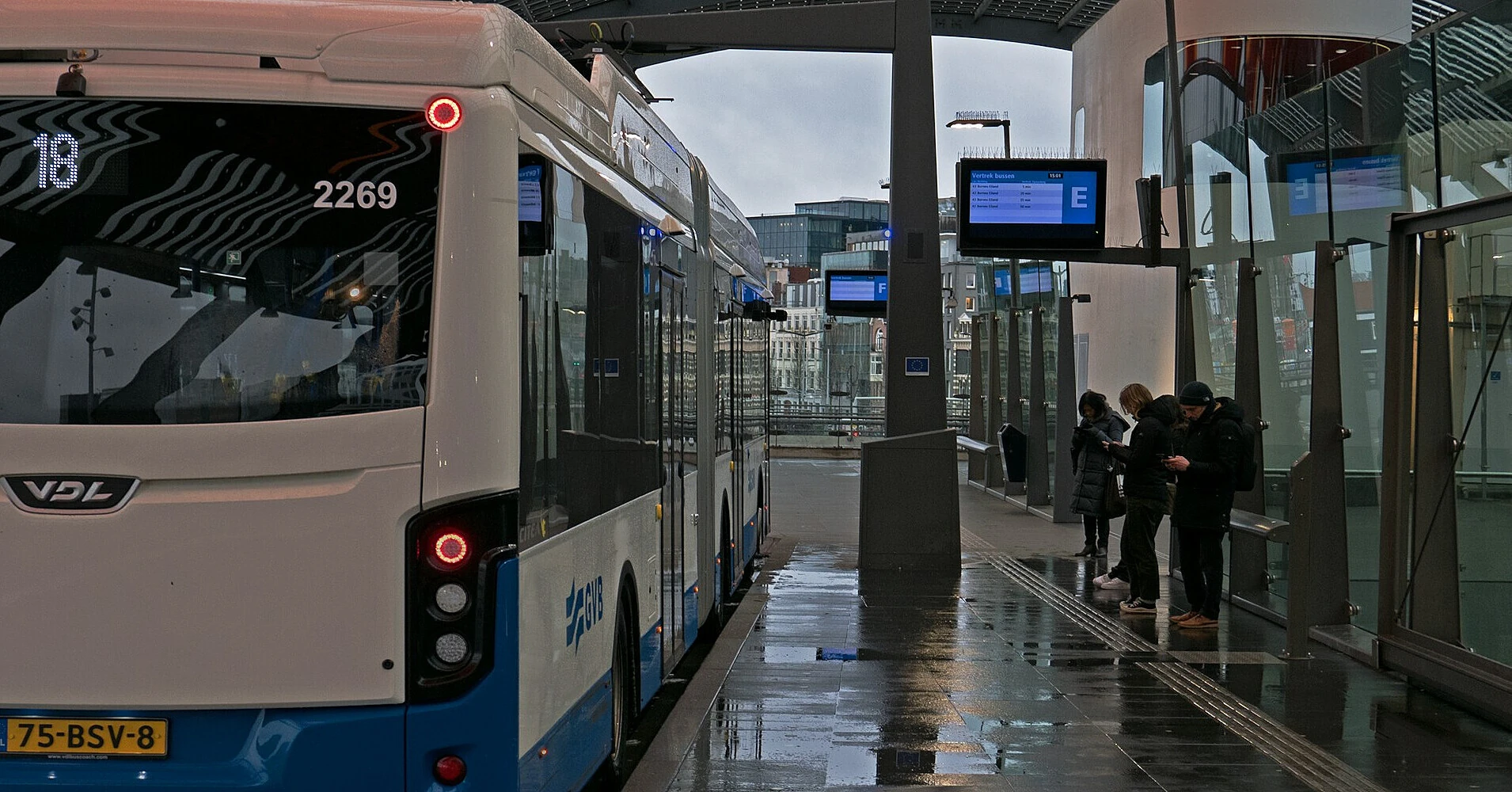
Ukrzaliznytsia will be able to expand bus connections with settlements that trains temporarily cannot reach due to Russian attacks and security restrictions. For this purpose, Ukraine will receive 34 large passenger buses from the French region of Île-de-France. The new transport will be used within the "UZ Dovese" project, which combines rail and bus transportation.
This was announced on November 3 by the Ministry of Restoration, Infrastructure and Transport of Ukraine following a meeting between Minister Mykola Kalashnyk and Vice-President of the Île-de-France region Stéphane Beaudet.
The first buses are expected to arrive in Ukraine already in November, with the rest expected during December. Thus, by the end of 2026, Ukrzaliznytsia should receive all 34 vehicles.
The main purpose of the buses is to provide transportation on sections where train movement is impossible or difficult due to infrastructure damage and the threat of Russian strikes.
Instead of completely canceling a rail route, the carrier can organize a transfer of passengers to a bus that will take them to their final destination or the nearest available railway station.
Such a model is already used on routes to Sumy and Lozova in Kharkiv region. Since October 1, Ukrzaliznytsia, together with regional military administrations, has launched a pilot project of combined "train + bus" transportation.
As reported by the Center for Transport Strategies, in the event of a threat of Russian attacks, passengers are transported by buses on sections where trains cannot continue.
For such trips, coordinated transfers between rail and road transport are provided. Tickets for the designated routes are available in the Ukrzaliznytsia app, and the cost of the full trip with a transfer does not change.
The arrival of additional buses will allow expanding this transportation model and reducing the dependence of passenger connections on the condition of individual railway sections.
Potentially, similar solutions could be used on other frontline routes, particularly in Donetsk region, where train movement is regularly restricted due to the security situation.
For example, in early November, Ukrzaliznytsia reported a temporary suspension of suburban rail service between Sloviansk and Kramatorsk. Alternative bus transportation on this section is provided by local authorities.
At the same time, the specific routes on which the buses transferred by France will operate have not yet been announced. Therefore, it is premature to talk about the launch of new regular Ukrzaliznytsia services to certain cities.
Combining rail and bus transportation is a common practice in Europe. For example, Germany's Deutsche Bahn, through its subsidiary DB Regio Bus, operates regional bus services, organizes feeder services to railway routes, and provides bus replacement for trains when necessary.
For Ukraine, the development of such a model is of particular importance in wartime conditions. Buses can complement the railway network, maintain transport connections with frontline communities, and provide passengers with alternative travel options when direct rail service is unavailable.
In addition to the transfer of buses, the Ukrainian and French sides discussed further assistance to Kyiv and Chernihiv regions. In particular, the possibility of supplying generators for critical infrastructure and charging stations for social facilities is being considered.
Based on materials from: Ministry of Restoration, Infrastructure and Transport of Ukraine, Center for Transport Strategies, Suspilne Donbas
