
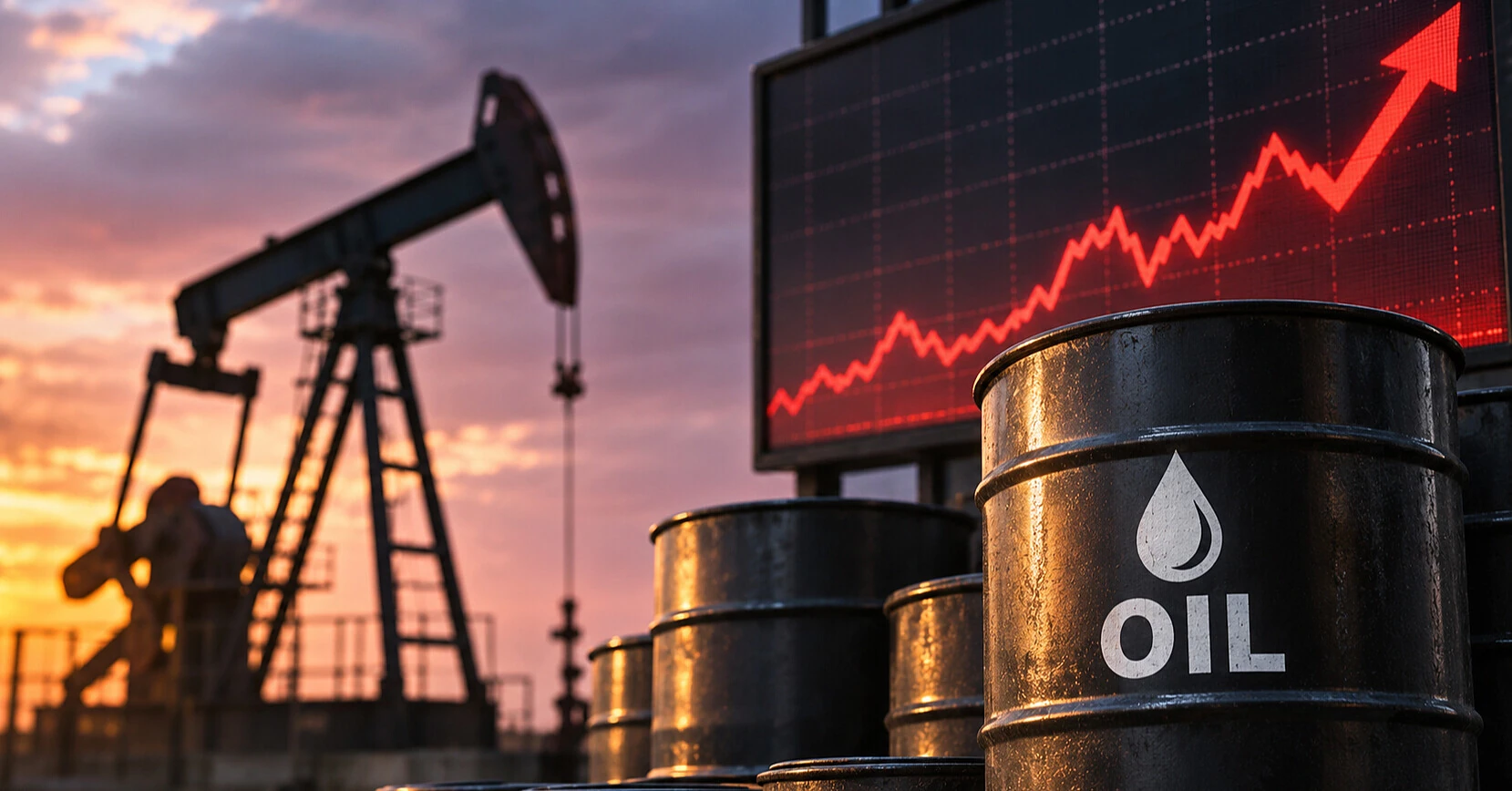
The rise in global oil prices continues to have a significant impact on fuel costs in Ukraine and increase inflationary pressure. According to model calculations by the National Bank, a 10% increase in world oil prices over the course of a year could lead to an internal fuel price increase of about 6% and add an additional 0.5 percentage points to consumer inflation.
This is stated in the NBU Inflation Report for October 2026, published on November 6.
The National Bank emphasizes that the scale of the impact of oil prices on the Ukrainian economy will depend on the duration of restrictions on global oil supply, the dynamics of international quotations, and the cost of logistics.
The calculations presented reflect possible consequences of an additional increase in world prices, not a mandatory scenario of fuel price hikes in Ukraine. Actual dynamics will also depend on the situation in the petroleum products market and the terms of their supply.
World oil prices sharply rose again
The NBU report notes that after a temporary decline in oil quotations in the summer of 2026, the global market faced a new price increase. In July, the average monthly spot price of Brent crude dropped to about 83 dollars per barrel, but in September it reached 117 dollars.
Thus, compared to July, oil rose in price by approximately 41%. In annual terms, the September Brent price was 72% higher than the corresponding figure for 2025.
Among the factors behind the price growth, the regulator highlights a reduction in petroleum product supply due to the war in the Middle East and supply disruptions. Additional pressure on the European market came from low diesel fuel inventories and an increase in seasonal demand.
This factor became especially noticeable in August and September, when agricultural work and cargo transportation intensified. The combination of limited supply and increased demand contributed to the rise in diesel fuel prices.
Diesel fuel is rising in price faster than gasoline
Changes in world markets have already significantly affected fuel prices in Ukraine. According to the NBU, in September 2026 fuel prices increased by 46.2% compared to the same month last year. For comparison, in July the annual rate of price increase temporarily slowed to 28%.
The most significant growth was recorded in the diesel fuel segment: in September its cost was 70.7% higher than a year earlier. In June, the corresponding figure was 52.5%.
A-95 gasoline was rising in price more slowly. In September its cost increased by 45.1% in annual terms. The NBU explains the more moderate dynamics by sufficient gasoline supply on the European market, while the situation with diesel fuel remained tense.
At the same time, changes in world prices are not transmitted to Ukrainian consumers instantly. They are first reflected in the cost of petroleum products on the wholesale market, and then gradually incorporated into retail prices at gas stations.
Expensive fuel affects the cost of goods and services
The National Bank draws attention not only to the direct increase in the price of gasoline and diesel, but also to secondary inflation effects. Higher fuel costs increase the cost of transportation, delivery of goods, and provision of transport services.
In particular, in September the annual growth rate of administratively regulated prices accelerated to 13.6% compared to 10.7% in June. This figure also exceeded the previous NBU forecast of 11.7%.
One component was the rise in public transport costs. In September, the fare increased by 41% in annual terms, compared to 25.5% in June. The most noticeable increase in transport tariffs was observed in Kyiv.
The increase in transport costs also affects enterprises that depend on regular supplies of raw materials, components, and finished products. Additional pressure on costs comes from damage to warehousing and logistics infrastructure as a result of Russian attacks.
As a result, the increase in fuel costs may gradually be reflected in the prices of other consumer goods and services, even if the enterprises themselves do not directly use petroleum products in production.
NBU worsened inflation forecast for 2026
Against the backdrop of rising energy prices and the intensification of the consequences of Russian attacks, consumer inflation in Ukraine exceeded the regulator's previous expectations.
If in June annual inflation was 7.2%, in September it accelerated to 10%. Core inflation, which excludes the most volatile components of the consumer basket, reached 8.8%.
Among the main reasons for the acceleration of price growth, the NBU cites expensive fuel, damage to production and logistics infrastructure, and increased business expenses for transportation and storage of products.
In the updated forecast, the National Bank expects consumer inflation to accelerate to 12.5% by the end of 2026. The growth of production costs, according to the regulator's estimates, will continue to affect the cost of goods and services in the coming months.
At the same time, the consequences of Russian strikes on enterprises and infrastructure are considered as a separate factor of inflationary pressure. According to NBU estimates, attacks and port blockades in the second half of 2026 may add an additional 0.7 percentage points to annual inflation compared to the scenario without these shocks.
When inflation may begin to slow down
The National Bank expects a gradual easing of inflationary pressure from 2027. According to the updated macroeconomic forecast, by the end of next year inflation may slow to 7.3%, and in 2028 return to the target level of 5%.
Among the factors that should contribute to a decline in price growth rates, the regulator highlights the expected decline in world oil prices, the gradual exhaustion of secondary effects of fuel price increases, and a slowdown in wage growth.
An additional role, according to NBU estimates, will be played by monetary policy measures aimed at limiting inflationary pressure and maintaining the stability of the financial system.
However, the forecast depends on the further security situation, the state of energy and logistics infrastructure, and the stability of international financial support for Ukraine.
Based on materials from: National Bank of Ukraine, official NBU statement, Mind.
