
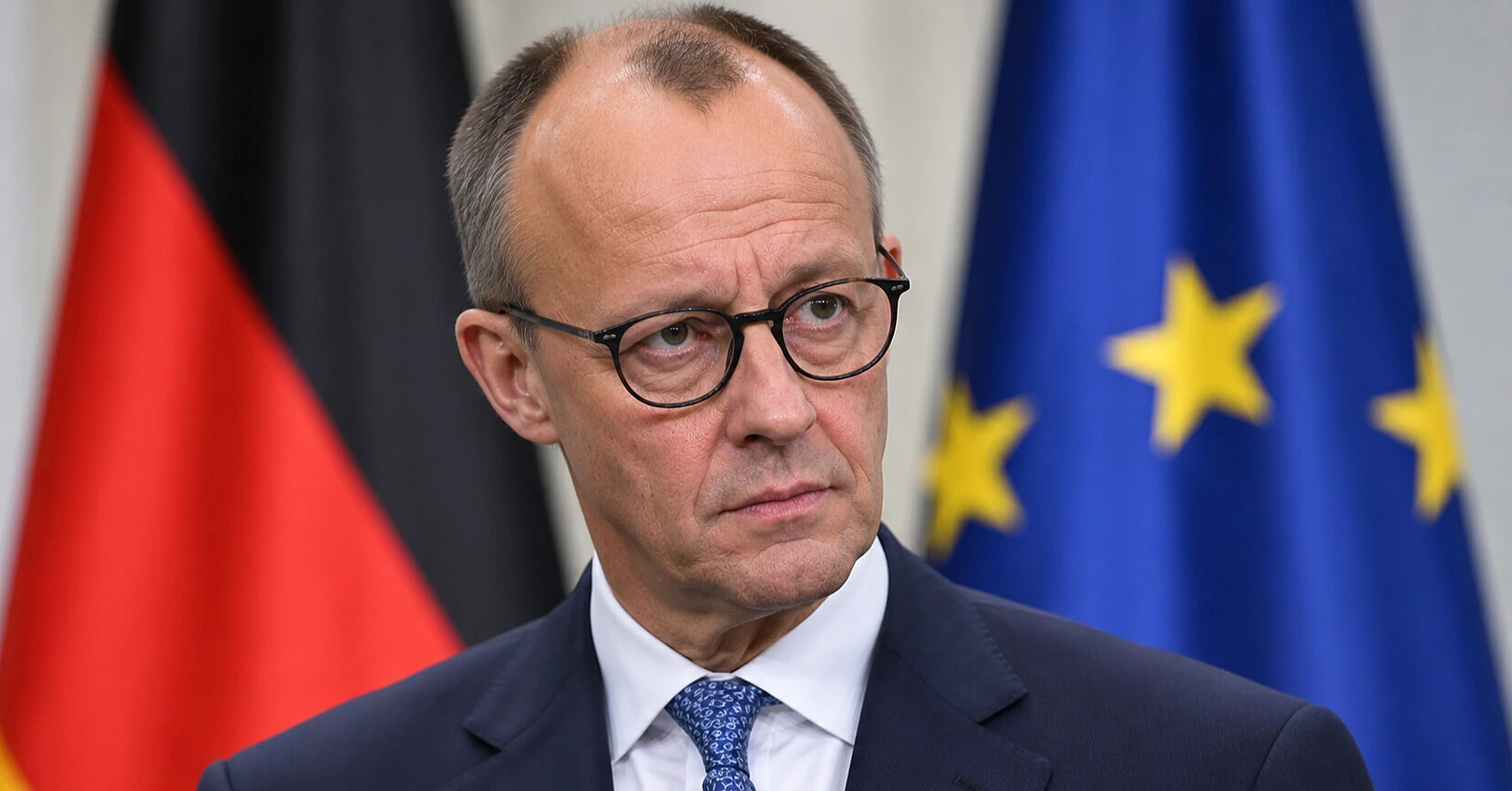
German Chancellor Friedrich Merz has threatened to block the adoption of the European Union's new seven-year budget if all bloc countries do not agree to participate in funding Ukraine in 2027 and subsequent years.
This was reported on November 9 by the Financial Times, citing a letter from the German chancellor to European Council President António Costa, dated November 6.
Merz made Germany's support for the EU budget for 2028–2034 conditional on the readiness of all EU states to commit to further financing for Ukraine.
In the letter, the chancellor stressed that the shared responsibility of European countries for covering Kyiv's financial needs should be a mandatory condition for further budget negotiations.
"The collective commitment of all of us, without exception, to make a fair contribution to covering Ukraine's financial deficit is a necessary condition," — wrote Merz.
A German government spokesman confirmed Berlin's position, saying that the participation of all EU states in financing Ukraine is necessary for the successful conclusion of negotiations on the new European budget.
Ukraine will need additional funding
According to Ukrainian authorities' estimates, in 2027 the country will need about 70 billion euros of additional assistance to cover budgetary and defense needs.
The European Union has already agreed a loan program, Ukraine Support Loan, with a total amount of 90 billion euros for 2026–2027. Of this amount, 45 billion euros are earmarked for the next year.
However, as the FT notes, even with previously agreed funding, Ukraine will face a significant shortfall. The European Commission is considering additional support mechanisms, including the issuance of joint EU debt.
The relevant proposals are expected to be presented to European leaders by the end of November. Brussels hopes to agree on a decision on additional funding before the end of 2026.
Meanwhile, the European Commission on October 30 already proposed that the EU Council approve the release of the remaining 45 billion euros under the current loan program for 2027.
Four EU countries oppose additional contributions
The main obstacle to reaching an agreement remains the position of individual EU states.
According to FT information, Hungary, Slovakia, Bulgaria, and the Czech Republic have indicated that they do not intend to participate in further increases of financial aid to Ukraine.
Hungary, Slovakia, and the Czech Republic have previously obtained exemptions from participating in interest payments on the already agreed 90 billion euro loan.
Germany, the largest net payer to the EU budget, seeks to achieve a more even distribution of the financial burden among bloc countries.
Berlin's position is particularly important given negotiations on the new seven-year EU budget. Its approval requires the unanimous consent of all member states, so Germany has the ability to block the final decision.
In addition, Berlin advocates changing the mechanism for making future decisions on financial support for Ukraine. In particular, the transition from the unanimity principle to qualified majority voting is being considered, so that individual countries cannot block the allocation of aid. However, changing the relevant rules will also require EU-level agreement.
The issue of funding Ukraine to be raised at EU summit
Merz's statement came on the eve of an informal meeting of European leaders in Dublin, scheduled for November 12–13.
The German chancellor insists that the meeting participants discuss Ukraine's funding deficit and determine further steps to cover it.
Another stage of negotiations will be a special European Council summit on November 26–27, at which they plan to consider Kyiv's financial needs and the parameters of the new EU budget.
Merz also demands the development of a long-term mechanism for supporting Ukraine starting from 2028. It should provide not only further allocation of funds, but also servicing of debt obligations related to European loans.
Meanwhile, a final agreement among all EU countries is still lacking. Germany's decision to link the approval of the new budget to funding for Ukraine increases pressure on governments opposed to additional commitments.
Based on materials from: Financial Times, European Commission, Council of the European Union.
