
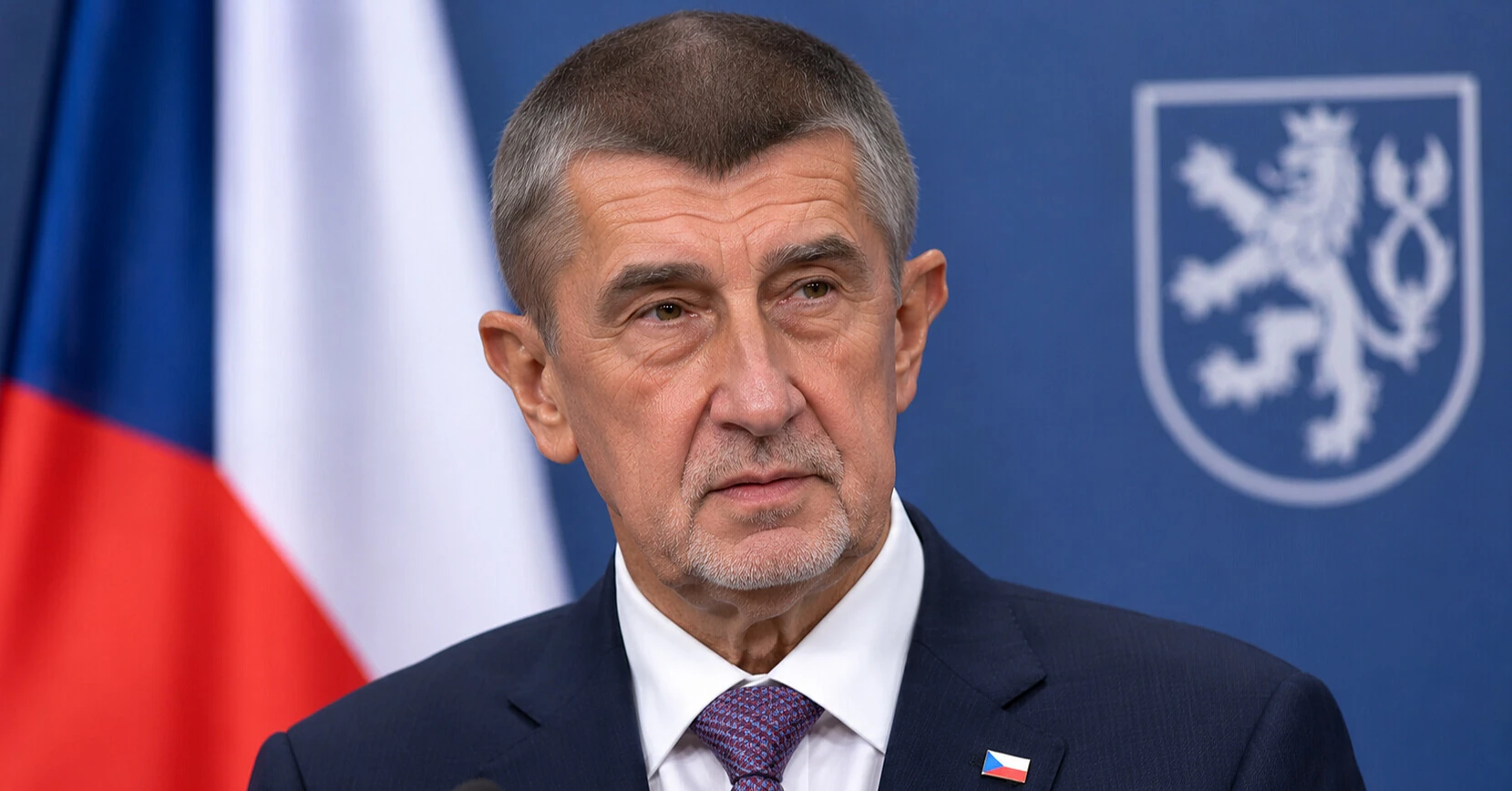
Czech Prime Minister Andrej Babiš spoke out against Germany's proposal to make the adoption of the next seven-year EU budget dependent on an agreement on further funding for Ukraine. In his view, these issues should be considered separately so that the EU can independently determine its long-term financial priorities.
This is stated in Babiš's letter to the President of the European Council António Costa, the text of which was published by the Czech government on November 10.
The Czech Prime Minister stressed that Ukraine needs predictable and sustainable long-term support. At the same time, financial assistance should be part of a realistic strategy to end the war.
"An agreement on future funding for Ukraine cannot be a condition for the adoption of the next Multiannual Financial Framework," — stated Babiš.
According to him, the European Union must retain the ability to independently determine and finance its long-term programs and priorities regardless of further developments around Ukraine.
At the same time, the head of the Czech government acknowledged that Ukraine's financial needs are enormous and a significant part of the costs are likely to fall on the European Union.
Babiš believes that such financial responsibility should be accompanied by corresponding EU political influence on the negotiations to end the war.
In the letter, he supported the proposal of Italian Prime Minister Giorgia Meloni to ensure full participation of European representatives in the diplomatic process.
According to Babiš, the European Council should agree on a clear political mandate that will allow the EU to directly participate in the negotiations and influence their outcome.
The Czech Prime Minister stressed that Europe should be an independent political actor in the process of ending the war, and not just a side that finances its consequences.
Babiš's statement was a response to the position of German Chancellor Friedrich Merz. Earlier, the German leader warned that Berlin could block the agreement on the EU budget for 2028–2034 if all member states did not commit to further financial support for Ukraine.
As previously reported, Merz outlined his position in a letter to António Costa dated November 6.
Germany demands a more even distribution of costs for supporting Ukraine among the European Union member states. It is estimated that in 2027, Ukraine's financial needs not covered by its own resources could amount to about 70 billion euros. The EU is expected to provide about 45 billion euros.
Meanwhile, the Czech Republic, Slovakia and Hungary have previously obtained exemptions from financial obligations related to the EU-agreed 90-billion-euro loan to Ukraine. These states also expressed reluctance to participate in new joint borrowing for Kyiv.
Speaking on November 10 at a joint session of the Czech and Slovak governments in Bratislava, Babiš said that blocking the European budget would at the same time jeopardize the funds earmarked for Ukraine in it.
He also criticized attempts to pressure individual EU member states. Slovak Prime Minister Robert Fico, for his part, called the German chancellor's demands blackmail and reminded that Bratislava has the same veto right in adopting the EU budget as Berlin.
The disagreements emerged on the eve of an informal meeting of EU leaders in Dublin, scheduled for November 12–13. It is expected to discuss further funding for Ukraine and Europe's participation in diplomatic efforts to end the war.
The next stage of budget negotiations is scheduled for November 26–27. The final approval of the EU's Multiannual Financial Framework requires the consent of all member states.
Based on materials from: Government of the Czech Republic, ČTK.
