
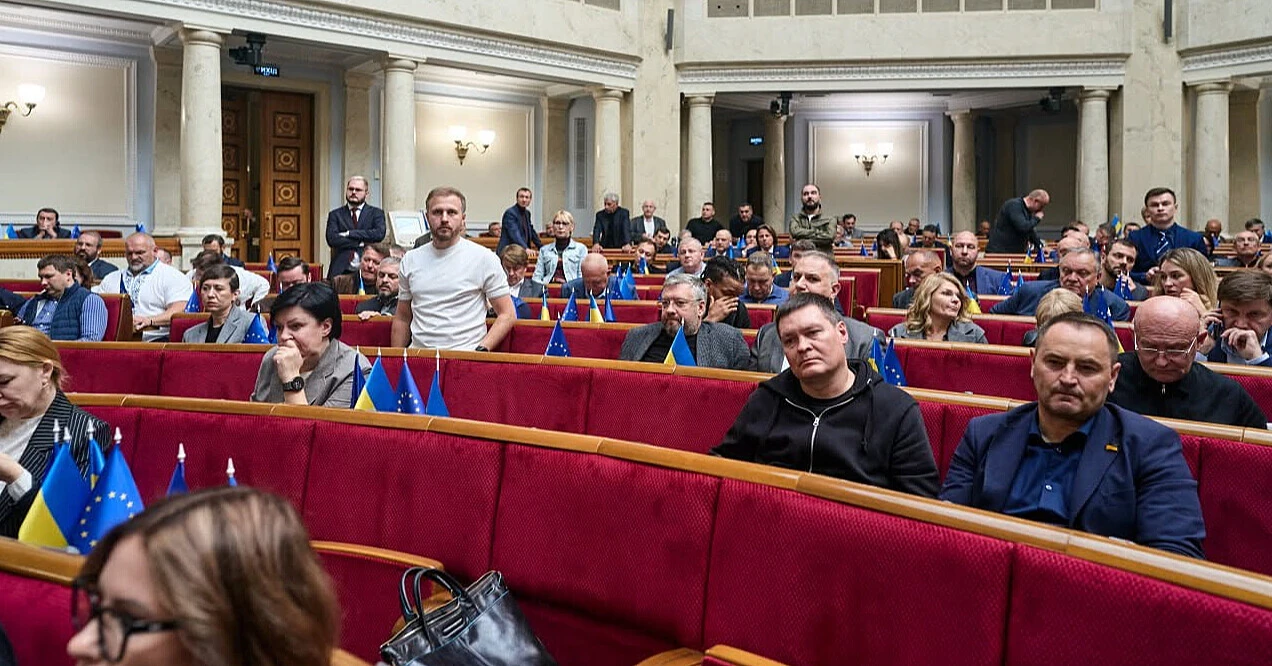
On November 11, the Verkhovna Rada adopted in the second reading and as a whole draft law No. 15437, which changes the rules for providing state support to enterprises. The document provides for the restoration of control by the Antimonopoly Committee of Ukraine (AMCU) over state aid and mandatory reporting on its use.
265 MPs voted for the relevant decision. The adoption of the law was confirmed by the parliamentary Committee on Economic Development.
After the start of the full-scale Russian invasion, part of the state control procedures over business aid was suspended. This allowed for more prompt support to enterprises, but at the same time limited the ability to check the impact of such support on competition.
The new law is intended to restore procedures for notification of state aid, assessment of its admissibility, and monitoring of the use of state and local resources.
New requirements for state support to enterprises
According to the provisions of draft law No. 15437, the AMCU is given the ability to fully check state aid programs and determine whether they create unjustified advantages for individual companies.
This concerns support for enterprises from the state or local budgets and other public resources, which may affect competitive conditions in the market.
It is envisaged that authorities and other aid providers must notify the Antimonopoly Committee of new support programs, except for cases for which special rules are provided by law.
The mechanism for recovering illegal state aid is also being improved. If the AMCU finds the support inadmissible for competition, it will be able to demand its termination or recovery in accordance with the established procedure.
This does not mean a ban on state aid to enterprises. The law is aimed at checking its compliance with competition rules, not at canceling business support programs.
Information on aid recipients to be opened in the register
A separate block of changes concerns the State Aid Register. It is envisaged to develop it as an electronic system that will contain information about support programs and their recipients.
The register should display information about aid providers and recipients, its purposes, volumes, sources of funding, and legal grounds.
The data is planned to be made publicly available, except for information access to which is restricted by law. Users will be able to receive electronic extracts free of charge.
For bodies that distribute state support, there is also an obligation to submit information about the aid granted and report on its use.
The draft law also defines the concept of minor state aid. For general cases, its maximum amount is the equivalent of 300 thousand euros per one economic entity over any three-year period. This is a separate category of support for which simplified rules apply, not a general limit on all state aid programs.
Special regime envisaged for frontline territories
The legislative changes take into account the conditions of martial law and the need to support enterprises that suffered from Russian aggression.
In particular, specific features of applying state aid rules are envisaged for territories of active hostilities and temporarily occupied territories, as well as during a defined transition period after the end of hostilities or occupation.
Separate exceptions concern support necessary for protection against armed aggression and compensation for damage caused by military emergencies.
The Antimonopoly Committee previously emphasized that the restoration of control should combine transparency of state funds distribution with preservation of existing business support programs.
The adoption of the law is also related to Ukraine's European integration commitments. In particular, the restoration of state aid control is provided for by Ukraine's Plan within the EU financial support program Ukraine Facility.
As of November 11, the law has passed the parliamentary vote and is being prepared for signing. The application of the new provisions will depend on the final wording of the transitional norms and the deadlines for entry into force established therein.
Based on materials: Verkhovna Rada Committee on Economic Development, Verkhovna Rada of Ukraine - draft law No. 15437, Antimonopoly Committee of Ukraine
