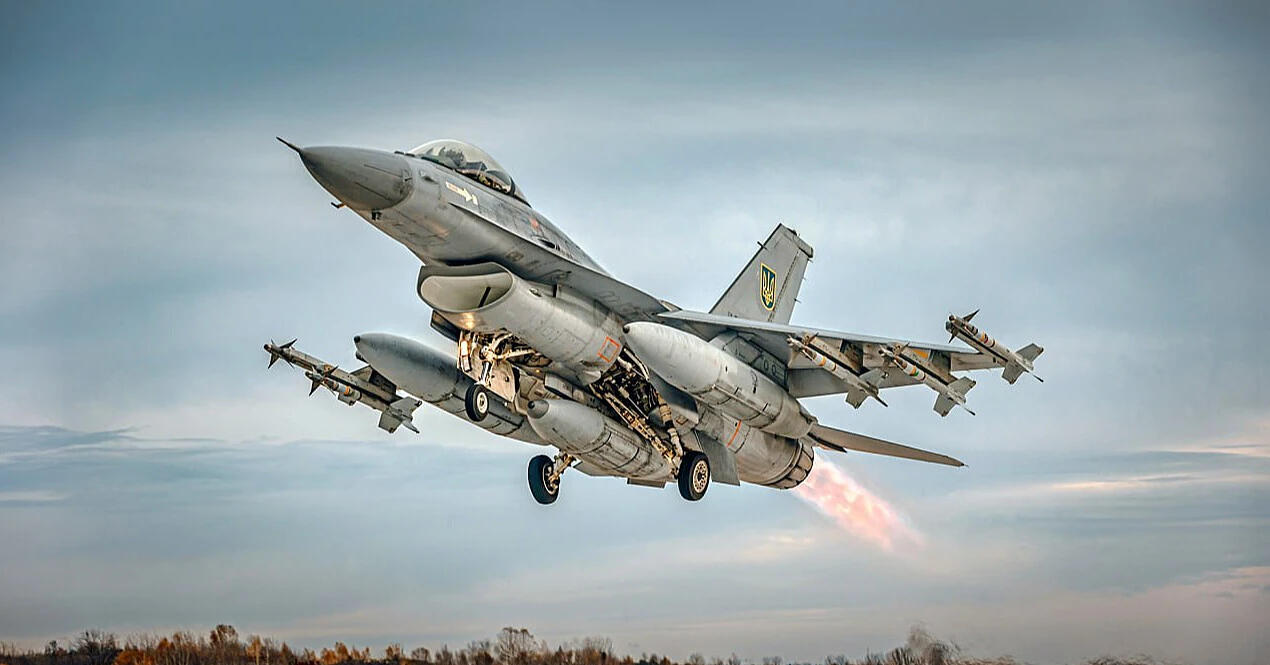
More than half of the F-16 fighters transferred to Ukraine may currently be unavailable for combat sorties due to delays in technical maintenance in Europe. The problem is worsening against the backdrop of Russia's massive use of high-speed jet drones.
The Wall Street Journal writes about this with reference to a Western source. The publication notes that a significant part of Ukraine's F-16 fleet is awaiting or undergoing scheduled maintenance. Ukraine's Air Force did not comment to the publication on the number of available aircraft.
One of the problems WSJ names is the long duration of technical inspections of the fighters. After approximately 300 flight hours, an F-16 requires an in-depth scheduled inspection of the engine, avionics, hydraulics, fuel system and other components.
In the US, this procedure usually takes a few weeks. At the same time, retired US Navy Rear Admiral Mark Montgomery told WSJ that for Ukrainian aircraft serviced in Belgium, the process in some cases stretches up to 40 weeks.
Belgian Sabena Aerospace Engineering is among those responsible for technical support of Ukrainian F-16s. In January, the US signed a contract with the company with a maximum value of about $235.5 million to service the Ukrainian fleet. Sabena did not disclose details of the work performance, citing operational security considerations. The timing may also be affected by a shortage of certain parts and significantly more intensive operation of the aircraft in combat conditions.
According to WSJ's source estimate, if the current pace of operation and maintenance continues, by the end of the year the problem with aircraft availability may worsen. The publication emphasizes that it is no longer just about the number of fighters transferred to Ukraine, but also about the ability to return them to service after scheduled maintenance.
Jet drones are becoming more numerous
The problem coincides with a change in the nature of Russian air attacks. According to WSJ calculations, in September Russia used about 2 thousand jet drones against Ukraine, while in June there were about 350. Such devices are much faster than conventional Shaheds, which complicates their interception by cheap interceptor drones.
This trend is also confirmed by the latest data from the Ukrainian side. On September 29, during the day, 29 jet Russian drones were recorded, of which air defense forces destroyed or suppressed 18. Ukraine is already testing its own high-speed interceptors to combat such targets, but their production still needs to be scaled up.
F-16s, however, remain one of the tools to counter high-speed drones and cruise missiles. That is why the availability of fighters after maintenance directly affects the capabilities of Ukraine's anti-aircraft defense.
Ukraine to receive additional aircraft from Belgium
Amid problems with the availability of the existing fleet, Ukraine has agreed on a new delivery. On September 29, President Volodymyr Zelensky announced that Belgium should transfer three F-16s by the end of 2026. The Ukrainian side plans to receive them under an accelerated procedure.
According to Zelensky, Ukraine has also already received urgent batches of ammunition for F-16s from Belgium and other countries, including Spain.
However, additional aircraft only partially solve the problem: along with the expansion of the fleet, Ukraine needs greater throughput capacity of the repair and maintenance system. Among the possible directions WSJ names moving a larger part of the work directly to Ukraine and using the existing F-16 infrastructure in Romania.
Based on materials: The Wall Street Journal, DW, Office of the President of Ukraine