

Saudi Arabia plans to expand oil pipelines bypassing the Strait of Hormuz
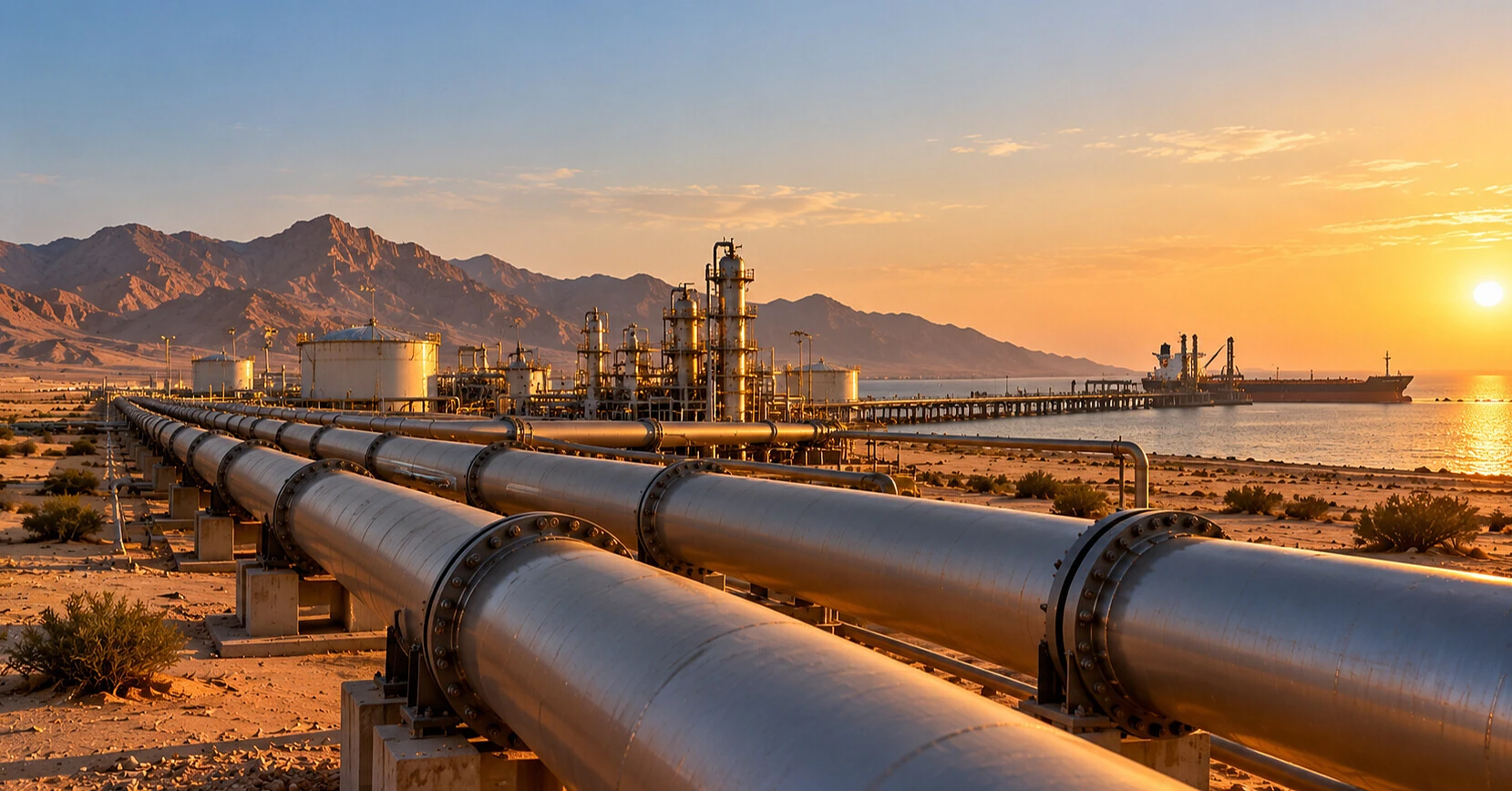
Saudi Arabia is considering increasing the capacity of oil pipelines that allow exporting oil bypassing the Strait of Hormuz to 10 million barrels per day over the next two to three years. The Kingdom seeks to reduce dependence on Gulf sea routes amid the military conflict in the Middle East.
On October 12, Saudi Energy Minister Abdulaziz bin Salman announced this during the World Petroleum Congress in Riyadh, Bloomberg reports.
Currently, the key alternative route for Saudi oil exports remains the East-West pipeline, which connects oil-producing areas in the east of the country with the port of Yanbu on the Red Sea coast. Its maximum capacity is about 7 million barrels per day.
According to the minister, the kingdom is considering increasing capacity by another 3 million barrels per day. To this end, they plan to modernize the pumping infrastructure of the East-West pipeline, as well as convert part of the gas transportation system for pumping oil.
In particular, one of the gas pipelines may be temporarily adapted to transport about 1.2 million barrels of oil per day over the next seven to eight weeks. In the future, additional investments will allow increasing its capacity to 3 million barrels.
However, the use of the gas pipeline for oil transportation will initially be temporary. By May 2027, it is planned to return it to supplying natural gas needed to meet domestic demand in the summer. Saudi Aramco is also working on technical solutions that will allow using this infrastructure for both types of fuel depending on needs.
The need to expand alternative routes has intensified after disruptions to shipping through the Strait of Hormuz. Since the start of the war between the US and Iran, the East-West pipeline has become one of the main channels for Saudi oil exports.
However, in September, the pipeline itself suffered damage as a result of drone attacks, which led to a temporary halt in its operation. After repairs, transportation gradually resumed. According to Abdulaziz bin Salman, as of October 6, pumping volumes reached 5.8 million barrels per day.
Saudi Arabia is also considering broader involvement of international partners in developing pipeline infrastructure. The minister expressed interest in increasing the number of investors, operators, designers and financial participants in such projects.
The Strait of Hormuz remains one of the most important routes for global energy trade. According to the International Energy Agency, in 2025, about 20 million barrels of oil and petroleum products per day were transported through it — about a quarter of global seaborne oil trade.
Expanding pipelines would allow Saudi Arabia to redirect larger volumes of crude oil to the Red Sea without passing through the Strait of Hormuz. At the same time, the announced capacity of 10 million barrels per day is a long-term goal, not an already achieved volume of transportation.
Based on materials from: Bloomberg, Argaam, International Energy Agency