

EU considers frozen Russian assets to cover Ukraine's funding gap
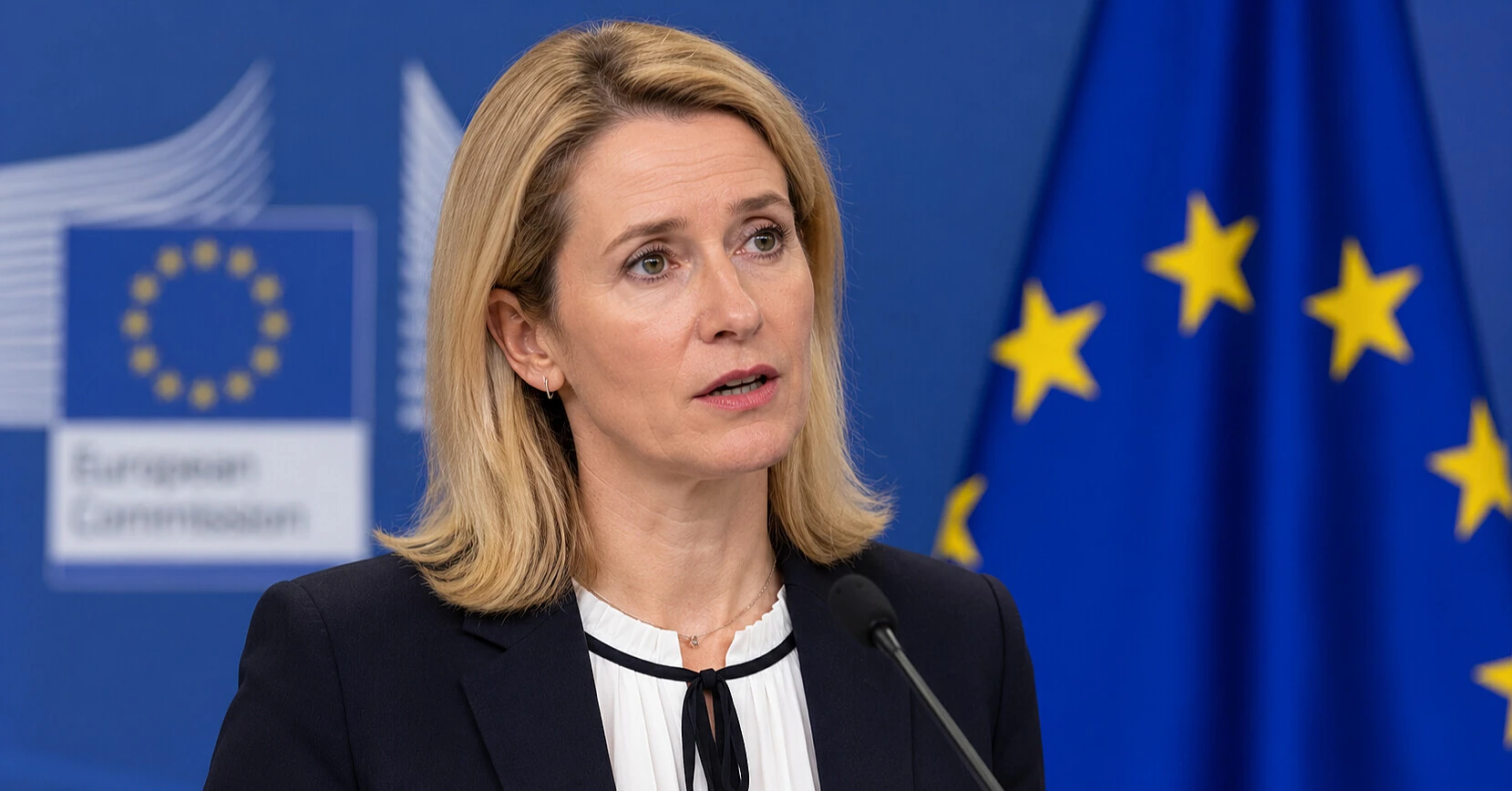
The European Union is once again discussing the possibility of using frozen Russian assets to cover Ukraine's funding gap expected in 2027. Brussels considers this option one of the most logical, since Russia should bear financial responsibility for the consequences of the war it unleashed.
EU foreign policy chief Kaja Kallas said this on Monday, October 12, at a press conference in Luxembourg following a meeting of the EU Foreign Affairs Council.
According to Kallas, the foreign ministers of the EU member states discussed the expected shortage of funds to support Ukraine next year. Many participants in the meeting proposed returning to the issue of Russian assets frozen in Western financial institutions.
"Due to the funding gap, Ukraine faces hard times. Since we see no signs that Russia is currently considering peace, we need to help Ukraine withstand. And that means the question arises of where the money will come from," — Kallas said.
Russian assets are back on the negotiating table
The EU foreign policy chief stressed that the fairest solution would be to finance Ukraine's recovery and support at the expense of the state that caused it damage.
"It is most logical for Russia to pay for the damage caused. That is why frozen assets are back on the negotiating table," — Kallas noted.
According to her, the discussion of this mechanism will continue, since European states need to agree on the distribution of financial and legal risks.
"Ultimately, it is about the distribution of risks among member states. It is important that this issue does not fall off the agenda while we consider various instruments to cover the funding gap," — the EU representative added.
At the same time, there is still no final decision on directing frozen Russian assets to finance Ukraine. The EU continues to explore possible mechanisms for their use.
How much Russian assets are frozen in Europe
About 210 billion euros of Russian state assets, mostly reserves of the Central Bank of the Russian Federation, are blocked in the European Union.
The bulk of these funds — approximately 185 billion euros — is held in the Belgian depository Euroclear.
The discussion of their use has been ongoing for several years. One of the options under consideration is providing Ukraine with a so-called reparations loan secured by frozen Russian assets.
Unlike direct confiscation, such a scheme involves creating a special financial mechanism allowing the use of the value of blocked funds to lend to Ukraine while maintaining legal obligations to their original owner.
However, the implementation of the initiative faces resistance from individual states, primarily Belgium.
Belgian authorities fear legal claims from Russia and potential financial consequences for the Euroclear depository. Therefore, Brussels demands guarantees that potential risks will not have to be borne solely by the Belgian state.
Among the new proposals is the transfer of Russian assets and related liabilities to a special EU-level structure. Such an approach could distribute responsibility among European countries.
At the same time, the EU already uses the proceeds generated by frozen Russian assets. According to European Commission data as of early October, Ukraine has received 3.8 billion euros in support from such proceeds since 2022.
Ukraine needs additional funding in 2027
The problem of covering the budget deficit is becoming increasingly urgent against the backdrop of the ongoing war and increased defense spending by Ukraine.
Ukrainian Finance Minister Serhiy Marchenko said during a discussion at the European Policy Centre on September 28 that the uncovered state budget deficit for 2027 is estimated at 32.6 billion dollars.
Additionally, the country may need about 45 billion dollars for military needs. Thus, the total funding needs in these two areas amount to almost 78 billion dollars.
The Ukrainian government relies on continued support from international partners, but notes that the protracted war creates an increasing burden on public finances.
Russian strikes on energy and industrial infrastructure also complicate the situation, as they lead to additional recovery costs and negatively affect tax revenues.
The EU already provides Ukraine with large loans
In February 2026, the EU created a separate financial support mechanism for Ukraine worth up to 90 billion euros for 2026–2027.
The program provides for:
- 60 billion euros — to strengthen Ukraine's defense capabilities and develop the defense-industrial complex;
- 30 billion euros — for budget support, ensuring the functioning of state institutions, providing public services and increasing economic resilience.
On October 2, the European Commission announced the disbursement of another tranche of 2.9 billion euros to Ukraine under the Ukraine Facility. Part of this amount was provided through the Ukraine Support Loan mechanism.
However, even the existing international support programs do not eliminate the need to find additional sources of funding for the next year.
That is why European countries are again discussing the possibility of involving frozen Russian assets, as well as alternative financial instruments.
Further progress of this initiative will depend on the agreement of legal guarantees, risk distribution and the political stance of EU member states.
Based on: Ukrinform, European External Action Service, European Policy Centre, European Commission.