

Chinese automakers face double pressure: EU curbs imports, Beijing cuts tax incentives
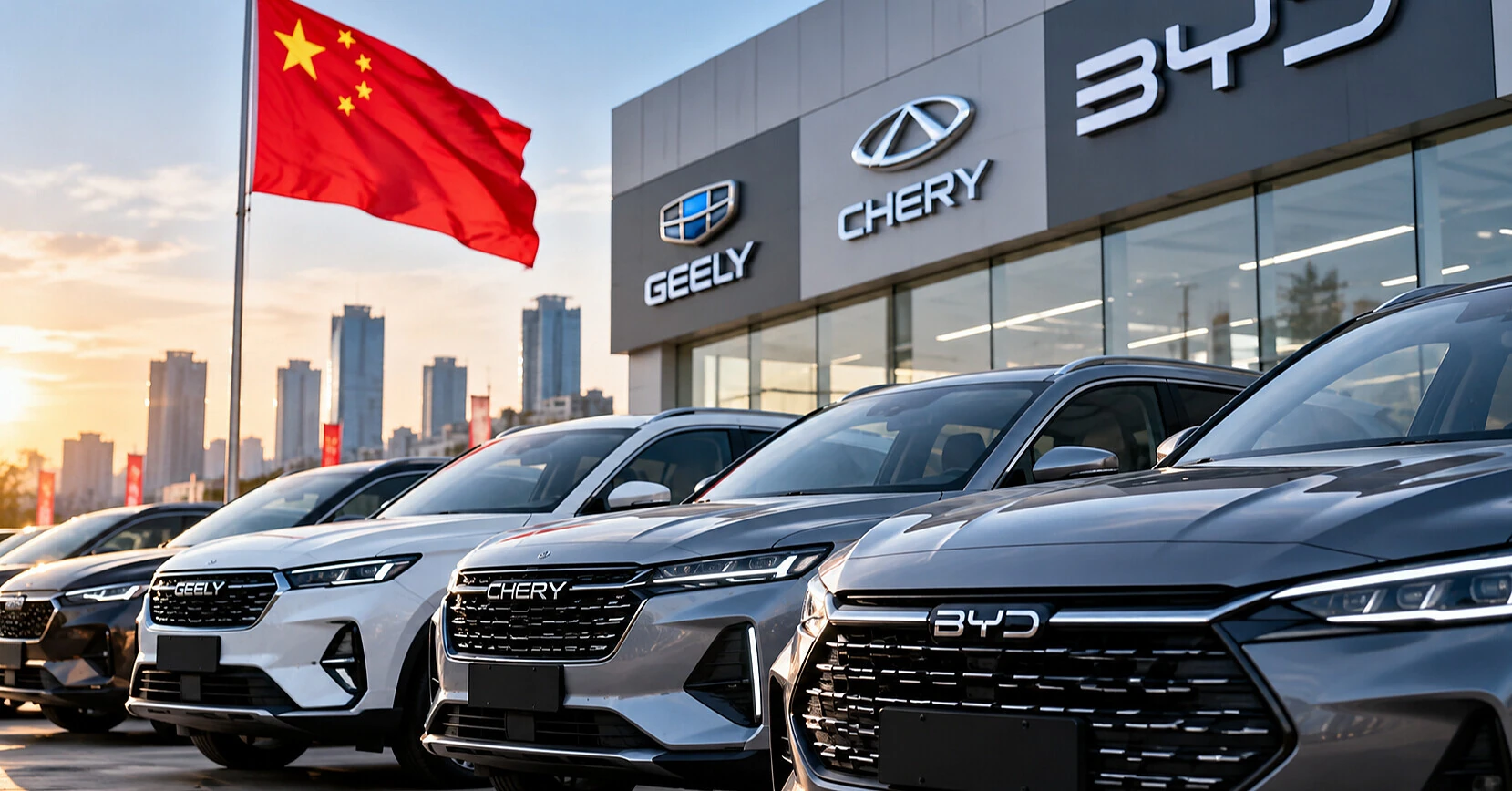
Chinese electric and hybrid vehicle manufacturers are facing new restrictions that could significantly reduce export profits. The European Union and China have agreed to limit supplies of Chinese hybrid vehicles to the European market, while Beijing has announced cuts to tax reimbursements for exporters of electrified transport. Analysts are already revising profitability forecasts for the largest Chinese automakers.
This was reported on October 14 by South China Morning Post, citing decisions by Chinese regulators, agreements with the EU, and assessments from international investment banks.
The new measures could be especially painful for Chinese companies that have recently offset declining domestic sales with rapid export growth.
Industry experts estimate that the simultaneous tightening of restrictions in Europe and the reduction of state support in China create additional financial risks for dozens of car companies.
China cuts tax reimbursements for car exporters
On October 12, China's Ministry of Finance and the State Taxation Administration announced changes to the value-added tax refund rules for exports of new energy vehicles.
From April 1, 2027, the export VAT refund rate for such vehicles will decrease from 13% to 9%.
This applies to the New Energy Vehicles (NEV) category, which includes fully electric vehicles and plug-in hybrids, as well as certain types of electric commercial transport.
This is not a new import tariff or a VAT increase for buyers. The change means that Chinese manufacturers will receive lower tax refunds when exporting their vehicles.
The refund amount will be determined by the export date stated in the customs declaration.
Deutsche Bank analysts warn that the reduction in refunds will directly affect the profitability of Chinese automakers' international sales.
According to the bank's estimate, BYD alone could lose approximately 5,000 yuan, or about $747, in net profit on each vehicle exported to the EU due to the change in tax rules.
Similar pressure will be felt by other Chinese manufacturers, including Chery, Geely, SAIC Motor, Great Wall Motor, Changan, Leapmotor, GAC, and Xpeng.
EU prepares quotas for Chinese hybrids
An additional challenge for the industry came from an agreement between the European Union and China reached on October 9 following trade talks in Beijing.
European Commissioner for Trade Maroš Šefčovič said the sides agreed on the principle of reducing exports of Chinese conventional and plug-in hybrids to Europe.
According to him, the agreement opens the way to reducing future supplies by more than half compared to a scenario without restrictions.
According to Bloomberg, the initial quota for 2027 is planned to be set at 350,000 vehicles, with subsequent annual increases of 6% over the next four years.
At the same time, the final decision on the quota mechanism still needs to be approved by EU leaders. Therefore, this is a preliminary agreement, not a restriction that has already taken effect.
The scale of potential losses for Chinese manufacturers is significant. According to data from the European Automobile Manufacturers' Association (ACEA), China exported 452,000 hybrid vehicles to the EU in the first half of 2026 alone.
Thus, the proposed annual quota would be even lower than the supply volume for the first six months of the current year.
Chinese companies had been actively increasing hybrid sales in Europe after the EU imposed additional countervailing duties on fully electric vehicles made in China in 2024.
Now restrictions could extend to a segment that remained one of the main growth areas for Chinese car exports.
Analysts lower BYD profit forecasts
The combination of European trade restrictions and Chinese tax refund cuts has already impacted financial outlooks for leading automakers.
Deutsche Bank lowered its BYD net profit forecast for 2027 by 21%.
According to the bank's analysts, due to the new European quotas, BYD's sales in the EU market could decline by about 80,000 vehicles.
This is especially sensitive for the company, as its international business has become an important growth driver amid weakening domestic demand.
Morgan Stanley believes that Chinese automakers may accelerate production localization in Europe to reduce dependence on imported supplies.
In that case, demand could rise for European auto plants operating below capacity, as well as for contract vehicle assembly services.
Battery and auto component manufacturers already having industrial capacity within the EU could also benefit.
Slowing sales in China increase pressure
The new restrictions come at a time when the Chinese auto industry is increasingly reliant on foreign markets.
According to data cited by South China Morning Post, in the first nine months of 2026, car sales in China's domestic market fell by 21.7% year-on-year to 13.3 million units.
At the same time, exports continue to surge. The China Passenger Car Association forecasts that overseas shipments could reach 12 million vehicles in 2026, up from 8.3 million in 2025.
Export growth had allowed manufacturers to partly offset weak domestic demand and fierce price competition. Now that profitability-supporting mechanism is under threat.
According to the publication, among nearly 30 Chinese automakers specializing exclusively in electric vehicles, only three ended the first half of 2026 with a profit: BYD, Leapmotor, and Nio.
Experts expect that the new trade and tax rules could accelerate industry consolidation. Companies with limited financial reserves will find it increasingly difficult to compete with the largest manufacturers.
At the same time, the restrictions may force Chinese automakers to change their international market entry strategies: instead of increasing exports of relatively cheap vehicles, they could expand overseas production and promote more expensive models with higher profitability.
Sources: South China Morning Post, China State Taxation Administration, European Commission