
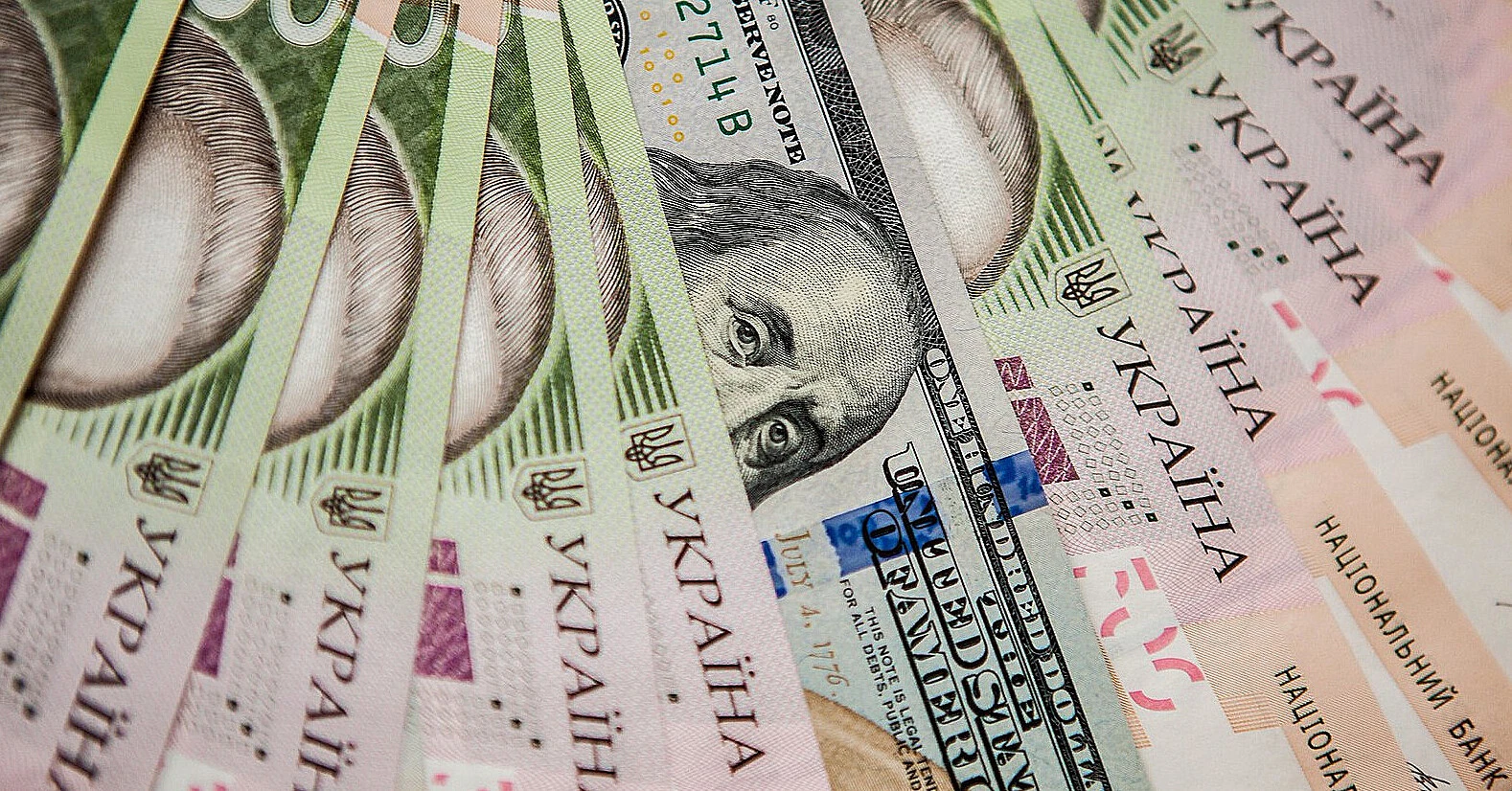
The National Bank of Ukraine sold a record $5.998 billion in October, yet the hryvnia kept weakening: the official dollar rate hit an all-time high five times during the month. A large share of the currency sold is foreign aid that returns to the market through the state budget as demand for imports.
According to NBU data on foreign exchange interventions, the previous monthly record was set in September at $5.52 billion. The last week of October also set a record: from October 26 to 30 the regulator sold $1.82 billion, 52.4% more than a week earlier. The previous weekly high of $1.63 billion dates back to the end of 2024.
From foreign financing to import demand
The mechanism starts when foreign currency reaches the state. To fund spending at home, the government needs hryvnias: it sells the currency to the National Bank and receives funds for budget payments.
The budget hryvnias then flow into the economy. Part of this spending, directly or through later transactions, creates demand for imported goods, equipment and components. To pay foreign suppliers, companies buy foreign currency.
When market supply falls short, the NBU covers the gap with interventions. Foreign financing coming in and currency sales by the regulator are therefore two ends of the same chain.
The National Bank described this mechanism using September's operations as an example. Ukraine received a $3.81 billion defense tranche from the EU under the Ukraine Support Loan programme. Because these funds are earmarked, they are not counted in international reserves. In September, however, the government converted them into hryvnias by selling them to the NBU, and reserves rose by the same amount. Subsequent hryvnia spending, the regulator explained, creates additional demand for foreign currency.
That does not mean all the aid necessarily returns to the market as currency purchases: the share of import-related spending and the timing of payments vary.
September balance: $5.45 billion in sales, reserves down by about $1.56 billion
The same NBU reserves report for September shows how far inflows offset interventions. Reserves were affected by the following factors.
| Factor affecting reserves in September | Amount, USD million |
|---|---|
| Inflows via World Bank accounts | +890.4 |
| Government conversion of EU funds under the Ukraine Support Loan | +3,810.0 |
| NBU currency sales, balance-sheet data | −5,449.9 |
| Public debt service and repayment, including IMF payments | −450.0 |
| Revaluation of assets and other factors | −368.3 |
Overall, reserves fell in September from $48.66 billion to $47.10 billion, or by 3.2%. Inflows and the conversion of EU funds covered most of the sales, so reserves declined far less than the volume of interventions.
In the reserves balance, September sales are shown as $5.45 billion, while intervention statistics put them at $5.52 billion: these are two different types of NBU reporting. The September ratio cannot be applied to October, as the mix of inflows, payments and revaluation changes every month.
In October, budget-driven demand coincided with weaker supply from exporters
The redistribution of foreign financing does not by itself remove pressure on the exchange rate. What matters is the size and timing of budget spending, import needs and the flow of export earnings.
At a briefing on October 29, NBU Deputy Governor Yuriy Heletiy named two factors behind the growing pressure on the hryvnia: higher budget spending and lower foreign currency supply from the agricultural sector and metallurgy due to damaged logistics.
According to him, average daily net demand for non-cash currency rose from $172 million in the first two-thirds of October to $230 million over the five trading days before the briefing, an increase of roughly a third. In January–October, client demand for foreign currency grew by at least 25%, or about $16 billion, compared with the same period last year, while supply rose by only $2 billion.
That is why, even with foreign financing in place, the regulator has to step up interventions: budget spending is already generating demand, and currency sales by exporters are not enough to cover it. On the same day, the NBU raised its key policy rate from 16% to 16.5%, citing stronger price pressure and worsening inflation expectations.
What the October reserves balance will show
The record $5.998 billion shows how much currency the market had to take from the NBU, but it does not reveal how reserves changed. That will become clear from the October reserves report, which the National Bank publishes early the following month: it will include inflows from partners, conversion of EU funds, debt payments and revaluation.
The sustainability of this model depends on how regularly foreign financing arrives and whether the economy can increase its own supply of foreign currency.
